

Jimmy Levin’s Remarkable Rise in Global Credit Markets
How a Harvard computer-science graduate became Sculptor Capital’s chief investment officer and one of the best-known leaders in alternative asset management

Introdution
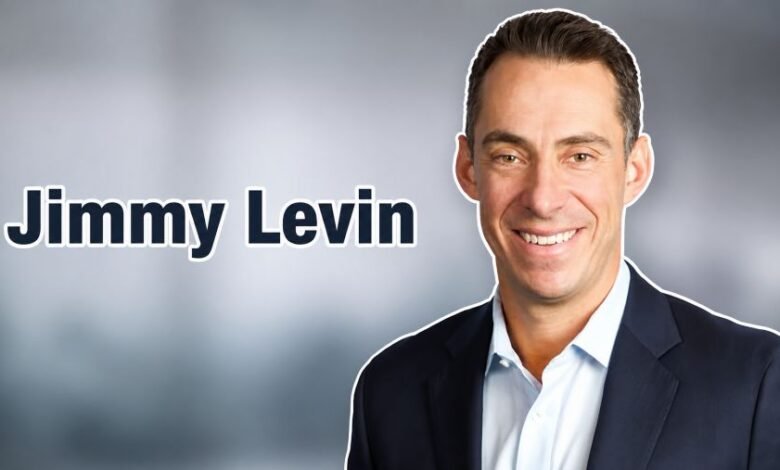
Jimmy Levin is an American investment executive known for his work in credit markets, hedge funds and global asset management.
His official name is James S. Levin, although he is widely known professionally as Jimmy Levin. He joined the investment firm formerly called Och-Ziff Capital Management in 2006 and gradually became one of its most important decision-makers.
Today, he serves as Chief Investment Officer and Executive Managing Partner of Sculptor Capital Management. His responsibilities include overseeing investment portfolios, allocating capital and helping guide the company’s wider business strategy.
Quick Bio
| Detail | Information |
|---|---|
| Full name | James S. Levin |
| Known as | Jimmy Levin |
| Approximate age | About 43 in July 2026 |
| Nationality | American |
| Profession | Investment executive and hedge-fund manager |
| Famous for | Leading Sculptor Capital’s investment operations |
| Current position | Chief Investment Officer and Executive Managing Partner |
| Education | BA in Computer Science |
| University | Harvard University |
| Career field | Credit investing and alternative asset management |
| Joined Sculptor | 2006 |
| Former senior role | Chief Executive Officer |
| Professional base | New York, United States |
Who Is Jimmy Levin?
James “Jimmy” Levin is a senior investment professional who has spent most of his career at Sculptor Capital Management.
Sculptor is an alternative asset-management company involved in areas such as:
- Multi-strategy investing
- Corporate credit
- Structured credit
- Private investments
- Real estate
- Institutional credit strategies
He is responsible for overseeing the company’s investment portfolios and deciding how capital should be distributed across different strategies, markets and geographical regions.
He also serves as chairperson of the Partner Management Committee and co-chairperson of the Portfolio Committee. He belongs to several credit and private-investment committees within the company.
Jimmy Levin’s Age
An official SEC filing published in June 2020 listed him as 37 years old.
Based on that filing, he would be approximately 43 years old in July 2026, depending on whether his birthday has already occurred during the year.
His exact date of birth has not been established through a reliable public record, so a specific birthday should not be presented as confirmed fact.
Education at Harvard University
Levin attended Harvard University, where he completed a Bachelor of Arts degree in Computer Science.
Computer science may appear different from investment management, but the subject can develop several abilities that are valuable in finance, including:
- Analytical thinking
- Data interpretation
- Logical problem-solving
- Risk modelling
- Understanding complex systems
- Making decisions from incomplete information
His official Sculptor profile continues to list Harvard University and computer science as his educational background.
Career Before Sculptor Capital
Before joining Sculptor, he worked at two investment organisations.
He was an analyst at Sagamore Hill Capital Management. He later worked as an associate at Dune Capital Management.
These early positions introduced him to alternative investments and institutional finance before he joined Och-Ziff Capital Management in 2006.
Official SEC filings confirm both roles and state that Dune Capital was his final known employer before Sculptor.
Joining Och-Ziff in 2006
Levin joined Och-Ziff Capital Management in 2006.
Och-Ziff was founded by Daniel Och and became one of the most recognised alternative asset-management firms in the United States. The company was later renamed Sculptor Capital Management.
He initially developed his reputation through credit investing. His work covered complex areas such as structured debt, distressed investments and opportunities created by changing financial markets.
Rather than remaining in one narrow role, he gradually became involved in the company’s wider investment decisions.
Breakthrough in Structured Credit
One of his most important early career moments came through a major structured-credit strategy.
Institutional Investor reported that he directed a roughly $7.5 billion structured-credit investment in 2012. The strategy reportedly generated approximately $2 billion for Och-Ziff.
This result helped establish him as one of the leading younger investment professionals working in the hedge-fund industry.
In 2014, Institutional Investor included him in its Hedge Fund Rising Stars list. He was 31 at the time and was already serving as Head of Global Credit.
Becoming Head of Global Credit
As Head of Global Credit, he became responsible for a major part of the firm’s investment platform.
Credit investing involves lending money or investing in debt issued by companies, property businesses and other organisations. The potential return normally comes from interest payments, changes in the value of the debt or the restructuring of financially troubled businesses.
His responsibilities included identifying opportunities across different forms of credit while controlling the risk of financial loss.
This position required him to understand company finances, debt agreements, market conditions and the possible outcomes if a borrower experienced difficulty.
Promotion to Chief Investment Officer
He was promoted to co-chief investment officer in 2017 and later became the company’s sole chief investment officer.
The CIO position placed him at the centre of Sculptor’s investment process.
His duties included:
- Overseeing investment portfolios
- Allocating money between strategies
- Reviewing major investment opportunities
- Managing risk across markets
- Working with specialist investment teams
- Helping determine the firm’s long-term direction
His rise from an investment employee to chief investment officer took approximately 11 years.
Becoming Chief Executive Officer
In June 2020, Sculptor announced that Levin would succeed Robert Shafir as chief executive officer.
He officially became CEO on 1 April 2021 while continuing to serve as chief investment officer.
As CEO and CIO, he held responsibility for both the investment side of the company and its wider corporate direction.
The role gave him authority over major operating decisions, investment performance, leadership appointments and the company’s strategy during a difficult period for the business. Reuters reported that he was 37 when the succession plan was announced.
Sculptor’s Acquisition by Rithm Capital
A major change occurred when Rithm Capital agreed to acquire Sculptor.
The acquisition was completed on 17 November 2023 for approximately $719.8 million. Sculptor became part of Rithm Capital and its publicly traded shares were removed from the New York Stock Exchange.
After the transaction, Levin continued with Sculptor as Chief Investment Officer and Executive Managing Partner.
According to Rithm Capital’s official acquisition announcement, he said that combining the two companies placed Sculptor in a stronger position for long-term success.
Current Role at Sculptor Capital
As of July 2026, the company’s official leadership page continues to identify him as its Chief Investment Officer and Executive Managing Partner.
He is also part of Sculptor’s Office of the CIO.
His present responsibilities include:
- Overseeing all investment portfolios
- Directing capital allocation
- Reviewing strategies across different regions
- Chairing senior management committees
- Supporting private-investment decisions
- Guiding business strategy
- Making important operating decisions
Readers can view his position and responsibilities on Sculptor Capital’s official leadership profile.
Investment Strategy and Leadership Style
His public investment approach focuses on flexibility.
Sculptor invests across several asset classes rather than depending on one type of opportunity. This allows its teams to move capital when markets change.
Important parts of the approach include:
Risk-adjusted returns
A large return may not be attractive if it requires taking an unreasonable amount of risk. Investment performance must therefore be judged alongside the possibility of loss.
Flexible capital allocation
Money can be moved between different strategies, industries and regions when new opportunities appear.
Collaboration
Credit, real-estate and multi-strategy teams can share research and specialist knowledge.
Controlled leverage
Using less borrowed money can give an investment firm more flexibility during periods of market stress.
Long-term client results
Sculptor’s public material regularly presents investor returns and client interests as central parts of its investment mission.
Major Career Achievements
His most important documented career achievements include:
- Joining Och-Ziff in 2006
- Becoming a company partner
- Building a senior position within global credit
- Leading a major structured-credit strategy
- Receiving Hedge Fund Rising Star recognition
- Becoming co-chief investment officer
- Rising to sole chief investment officer
- Serving as CEO from 2021
- Leading Sculptor through its sale to Rithm Capital
- Continuing as CIO and Executive Managing Partner after the acquisition
His career is notable because he reached senior leadership while still comparatively young for the asset-management industry.
Compensation and Corporate Dispute
Levin’s compensation became the subject of a public dispute involving Sculptor founder Daniel Och.
Reuters reported that Och filed a lawsuit in 2022 concerning corporate governance and executive compensation. The complaint claimed that Levin received approximately $145.8 million in compensation for 2021.
The figure represented reported annual compensation connected with his executive position and performance arrangements. It should not be confused with a normal fixed salary or a verified personal net-worth figure.
The disagreement became part of a wider conflict between Sculptor’s board, current management and the company’s former founder.
The dispute concerned executive pay and company governance. It did not establish that Levin had been convicted of a crime.
Charity and Community Roles
Outside investment management, he has been connected with education and healthcare organisations.
He serves on the board of the East Harlem Tutorial Program, which supports education and development programmes for children and young people.
He is also a member of the Board of Overseers of NYU Langone Health Medical Center.
Both positions are listed in his official company profile.
Public Image
Levin is mainly known within finance rather than mainstream entertainment.
His public image is based on:
- Strong credit-market knowledge
- Rapid career progression
- Large and complex investment decisions
- Leadership of a global asset manager
- A flexible investment approach
- High reported executive compensation
- His professional dispute with Daniel Och
Supporters have described him as a skilled investor who helped strengthen Sculptor’s credit platform.
Critics have focused more heavily on executive compensation, company performance and governance decisions.
Similar Investment and Business Leaders
Readers interested in financial entrepreneurs can explore Rishi Khosla’s rise from Copal Partners to OakNorth. Khosla built businesses in financial research and commercial banking.
Another relevant story is Michael Scherb’s career in global mining finance, which explains how the Appian Capital founder moved from investment banking into private equity.
Why Is Jimmy Levin Famous?
He is famous for becoming one of the most senior leaders at Sculptor Capital Management.
He built his reputation through credit investing, particularly structured and opportunistic credit. He later became chief investment officer, served as chief executive officer and helped lead Sculptor through its acquisition by Rithm Capital.
His career has also attracted attention because of his unusually high reported compensation and his complicated professional relationship with Sculptor founder Daniel Och.
Interesting Facts
- His official name is James S. Levin.
- He studied computer science rather than finance.
- He graduated from Harvard University.
- He worked at Sagamore Hill and Dune Capital.
- He joined Och-Ziff in 2006.
- He became Head of Global Credit.
- He was recognised as a Hedge Fund Rising Star in 2014.
- He later became both CEO and CIO.
- Sculptor was acquired by Rithm Capital in 2023.
- He remained a senior investment leader after the acquisition.
Frequently Asked Questions
What is Jimmy Levin’s full name?
His full official name is James S. Levin.
How old is Jimmy Levin?
An SEC filing listed him as 37 in June 2020. This places him at approximately 43 years old in July 2026, depending on his birthday.
What does Jimmy Levin do?
He is an investment executive and hedge-fund manager. He serves as Chief Investment Officer and Executive Managing Partner at Sculptor Capital.
What did he study?
He completed a Bachelor of Arts degree in Computer Science at Harvard University.
When did he join Sculptor Capital?
He joined the company, then known as Och-Ziff Capital Management, in 2006.
Was Jimmy Levin the CEO of Sculptor?
Yes. He became CEO in April 2021 and continued as chief investment officer.
What is his current position?
He currently serves as Sculptor Capital’s Chief Investment Officer and Executive Managing Partner.
Why is he well known in finance?
He is known for structured-credit investing, building Sculptor’s credit business and reaching the company’s most senior investment and executive positions.
Final Thoughts
Jimmy Levin developed an influential career by combining analytical training with experience in complex credit markets.
After graduating from Harvard, he worked at Sagamore Hill and Dune Capital before joining Och-Ziff in 2006. His successful work in structured credit helped him rise from an investment professional to Head of Global Credit, chief investment officer and eventually chief executive officer.
The sale of Sculptor to Rithm Capital changed the company’s ownership, but it did not end his leadership role. He continues to oversee investments as Chief Investment Officer and Executive Managing Partner.
