
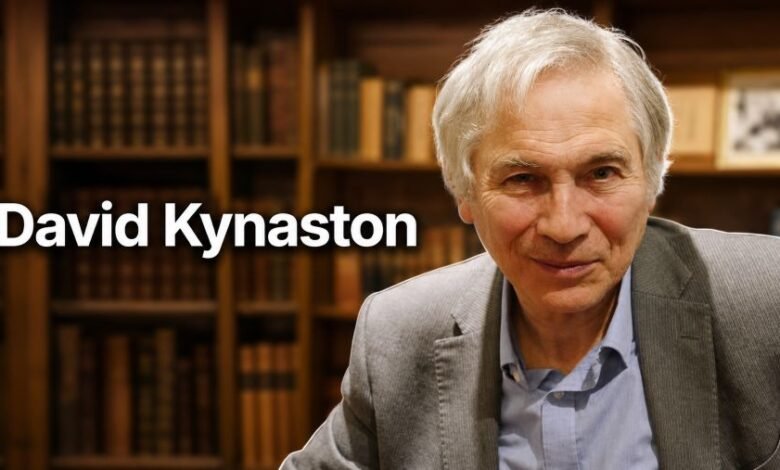
David Kynaston: The Historian Who Gave Ordinary Britain a Voice
A clear look at his early life, education, major books, writing method and lasting influence on British social history

Introduction
David Kynaston is a British historian and author best known for writing detailed books about modern Britain. His work explores politics, banking, education, sport and the everyday lives of ordinary people.
He became widely known through Tales of a New Jerusalem, a major series examining British life after the Second World War. He also wrote an important four-volume history of the City of London and an authorised history of the Bank of England.
Kynaston has worked as a professional historian since 1973. His simple but detailed storytelling has made difficult historical subjects easier for general readers to understand.
David Kynaston Quick Facts
| Fact | Details |
|---|---|
| Full name | David Thomas Anthony Kynaston |
| Date of birth | 30 July 1951 |
| Age | 74, as of 23 July 2026 |
| Birthplace | Aldershot, Hampshire, England |
| Nationality | British |
| Profession | Historian and nonfiction author |
| Education | New College, Oxford; London School of Economics |
| Qualification | BA in Modern History and PhD |
| Famous for | Tales of a New Jerusalem and City of London |
| Main subjects | British social, financial and institutional history |
| Honour | Fellow of the Royal Society of Literature |
| Residence | London, England |
| Current project | Deep Into the Sixties: Britain 1965–66 |
Who Is David Kynaston?
David Kynaston is one of Britain’s respected modern social historians. He studies major national events, but he also focuses on how those events affected ordinary families.
His books include political decisions, elections and economic changes. However, they also discuss television programmes, sport, shopping, schools, housing and conversations recorded in personal diaries.
This combination helps readers understand how people actually lived during different periods of British history.
According to Bloomsbury’s official author profile, he was born in Aldershot in 1951 and holds qualifications from both Oxford and the London School of Economics.
Early Life and Education
David Thomas Anthony Kynaston was born on 30 July 1951 in Aldershot, Hampshire. His parents divorced when he was nine years old.
He attended Wellington College, an independent boarding school in Berkshire. Kynaston later said that the school gave him stability and helped him develop confidence.
Three history teachers at Wellington played an important part in developing his interest in the subject. Their teaching encouraged him to study history at university.
He attended New College at the University of Oxford and completed a degree in modern history in 1973. He later studied at the London School of Economics and received his PhD in 1983.
His doctoral thesis was titled The London Stock Exchange, 1870–1914: An Institutional History. This early research helped establish his interest in financial institutions and the City of London.
How Did David Kynaston Become a Historian?
Kynaston began working professionally as a historian in 1973. His first book, King Labour: The British Working Class, 1850–1914, was published in 1976.
His early books covered British workers, government offices, cricket and financial organisations. These different subjects helped him develop a broad understanding of British life.
During the 1980s, he worked on a centenary history of the Financial Times. While completing that project, he became increasingly interested in Britain after the Second World War.
That interest eventually led to his largest and most famous project, Tales of a New Jerusalem.
The City of London Series
Between 1994 and 2001, Kynaston published a four-volume history of the City of London. The series covers the period from 1815 to 2000.
The four volumes are:
- A World of Its Own, 1815–1890
- Golden Years, 1890–1914
- Illusions of Gold, 1914–1945
- A Club No More, 1945–2000
These books explain how London grew into one of the world’s most influential financial centres. They also examine the people, institutions and traditions that shaped the City.
The series established Kynaston as an important historian of British finance.
Tales of a New Jerusalem
Tales of a New Jerusalem is David Kynaston’s major social history of Britain between 1945 and 1979.
The project begins at the end of the Second World War and is planned to finish with Margaret Thatcher’s 1979 general election victory.
Published books in the series include:
- Austerity Britain, 1945–1951 — published in 2007
- Family Britain, 1951–1957 — published in 2009
- Modernity Britain: Opening the Box, 1957–1959 — published in 2013
- Modernity Britain: A Shake of the Dice, 1959–1962 — published in 2014
- On the Cusp: Days of ’62 — published in 2021
- A Northern Wind: Britain 1962–65 — published in 2023
- Deep Into the Sixties: Britain 1965–66 — scheduled for publication in 2026
The series explains how Britain changed after the war. It covers housing, education, class, politics, popular music, television, sport and family life.
Other Major Books
David Kynaston has written and co-written books about several important parts of British history.
His notable works include:
- The Financial Times: A Centenary History
- Cazenove & Co.: A History
- The Bank of England: Money, Power and Influence, 1694–1994
- Phillips & Drew: Professionals in the City
- City State: A Contemporary History of the City and How Money Triumphed
- The Lion Wakes: A Modern History of HSBC
- Till Time’s Last Sand: A History of the Bank of England, 1694–2013
- Banker and Philanthropist: A Portrait of Anthony de Rothschild
Till Time’s Last Sand was an authorised history of the Bank of England. The project was commissioned in 2009 by Mervyn King, who was then governor of the bank.
Books About Sport
Sport has remained an important personal and professional interest throughout Kynaston’s life.
His sports-related books include:
- Bobby Abel: Professional Batsman, 1857–1936
- Archie’s Last Stand
- W. G.’s Birthday Party
- Arlott, Swanton and the Soul of English Cricket
- Shots in the Dark
- Richie Benaud’s Blue Suede Shoes
He is a lifelong supporter of Aldershot Town Football Club. Shots in the Dark follows the club during the 2016–17 football season while also recording events happening in Britain and around the world.
David Kynaston’s Writing Style
Kynaston does not tell history only through politicians and powerful institutions. He uses many different kinds of evidence, including:
- Personal diaries
- Letters
- Newspaper reports
- Government records
- Television and radio programmes
- Advertising
- Oral-history interviews
- Mass Observation records
- Sporting events
- Popular music
These sources allow ordinary people to speak inside his books. A national political event may appear beside a family discussion, a football match or a television programme from the same day.
This method makes history feel more personal and easier to imagine.
Work on Private Education
Kynaston has publicly criticised the unequal opportunities created by Britain’s private-school system.
His interest in the subject became stronger after watching his sons’ state grammar school play football against private schools with much greater resources.
In 2019, he and economist Francis Green published Engines of Privilege: Britain’s Private School Problem. The book examines how private education can provide advantages in university admissions, employment and influential professional networks.
They proposed a gradual fair-access plan under which private schools would reserve a share of places for publicly funded students.
Kynaston has made clear that his criticism concerns the education system rather than individual parents.
Personal Life and Interests
David Kynaston has publicly referred to two sons. Both attended a state grammar school and played football.
He lives and works in London. His main personal interests include history, cricket, football and British public life.
He has followed politics since childhood. He remembers paying close attention to the 1964 British general election when he was 13 years old.
Kynaston also believes that social class remains important when studying Britain. However, he argues that historians must look beyond simple class labels and understand individual experiences.
Awards and Recognition
Kynaston was elected a Fellow of the Royal Society of Literature in 2010. His official fellowship is recorded by the Royal Society of Literature.
Austerity Britain was longlisted for both the Orwell Prize and the Samuel Johnson Prize in 2008.
Modernity Britain was also longlisted for the Samuel Johnson Prize. Kynaston has additionally received recognition for his lifetime contribution as a British historian.
His books have regularly been selected as notable history publications by British newspapers, literary organisations and history magazines.
What Is David Kynaston’s Latest Book?
As of July 2026, Kynaston’s forthcoming book is Deep Into the Sixties: Britain 1965–66.
The book covers the period from Winston Churchill’s funeral in 1965 to England’s victory in the 1966 FIFA World Cup.
It examines British politics, music, culture and social change. Like his earlier books, it uses contemporary diaries and the voices of ordinary people.
The UK edition is scheduled for 24 September 2026. A US edition is expected on 24 November 2026.
Why Is David Kynaston Important?
David Kynaston is important because he has changed how many readers understand modern British history.
He does not separate major events from daily life. His books show that history is also found in homes, schools, workplaces, shops, football grounds and personal conversations.
His financial histories explain powerful institutions such as the Bank of England and the City of London. His social histories explain how economic and political decisions affected ordinary people.
This wide approach has helped make complex British history understandable to a large audience.
Readers interested in similar easy-to-read profiles can explore more biographies of notable people on Fixix.
Frequently Asked Questions
What is David Kynaston famous for?
He is famous for writing Tales of a New Jerusalem, a detailed social history of postwar Britain. He is also known for his four-volume history of the City of London.
How old is David Kynaston?
He is 74 years old as of 23 July 2026. He will turn 75 on 30 July 2026.
Where was David Kynaston born?
He was born in Aldershot, Hampshire, England.
Where did David Kynaston study?
He studied modern history at New College, Oxford. He later completed a PhD at the London School of Economics.
What was his first book?
His first published book was King Labour: The British Working Class, 1850–1914, released in 1976.
Is David Kynaston still writing?
Yes. His next book, Deep Into the Sixties: Britain 1965–66, is scheduled for publication in 2026.
What football club does he support?
He is a lifelong supporter of Aldershot Town Football Club.
Conclusion
David Kynaston has spent more than five decades recording British history. His books examine powerful banks and public institutions, but they never forget ordinary people.
Through diaries, letters, newspapers and personal memories, he shows how national change entered everyday homes and communities. His careful research and clear storytelling have made him an influential voice in modern British social history.