
Lucy Cooke: The Zoologist Changing How We See Animals
From sloths and frogs to animal behaviour and female biology, Lucy Cooke has built a career around questioning old ideas about the natural world.

Introduction
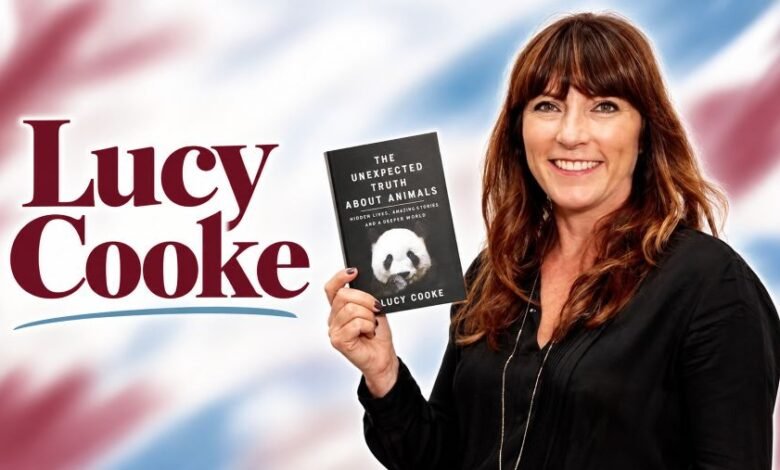
Lucy Cooke is a British zoologist, author, broadcaster and National Geographic Explorer. She is known for making unusual animal science easy to understand, often focusing on species people misunderstand or simply ignore.
Her work has taken several forms. Books. Television. Radio. Photography. Public talks. And, yes, a lot of sloths.
Cooke studied zoology at Oxford University and later moved into television before building a career that brought science and storytelling together.
Quick Facts About Lucy Cooke
| Fact | Details |
|---|---|
| Full professional name | Lucy Cooke |
| Nationality | British |
| Profession | Zoologist, author, broadcaster and documentary professional |
| Education | Zoology at New College, University of Oxford |
| Academic influence | Studied under evolutionary biologist Richard Dawkins |
| Known for | Animal behaviour, sloths and natural-history communication |
| Major books | A Little Book of Sloth, The Unexpected Truth About Animals, Life in the Sloth Lane, Bitch |
| Professional status | Active author, broadcaster and science communicator |
| National Geographic role | National Geographic Explorer |
| Organisation founded | Sloth Appreciation Society |
| Magazine work | BBC Wildlife Magazine columnist |
Who Is Lucy Cooke?
Lucy Cooke is a zoologist who turned scientific curiosity into a public-facing career.
That is the simple answer.
She writes about animals, presents wildlife programmes and speaks about the way humans have misunderstood animal behaviour. Her work often questions ideas that were once accepted as scientific fact.
She does this with humour too.
That matters.
Instead of treating zoology like a dry textbook subject, Cooke talks about odd mating habits, strange adaptations, lazy-looking sloths and animals that rarely get the attention given to lions, pandas or elephants.
Her approach has helped her reach readers and television audiences far outside academic science.
Early Interest in Animals
Cooke grew up in East Sussex.
Her interest in wildlife started early. She has spoken publicly about collecting tadpoles with her father around Romney Marsh and being fascinated by frogs.
Frogs came first.
Sloths arrived later.
That childhood interest eventually led her towards formal zoology studies and, much later, conservation and wildlife filmmaking.
Oxford Education
Cooke studied zoology at New College, University of Oxford.
During her studies, she was taught by evolutionary biologist Richard Dawkins. Her academic interests included evolution and animal behaviour, subjects that still sit at the centre of much of her work.
But she did not move straight into a standard academic career.
She chose television.
That decision shaped almost everything that followed.
How Lucy Cooke Started Her Career
Cooke initially worked in television after leaving Oxford.
Interestingly, her early work was connected with comedy rather than wildlife.
That may seem like an odd route for a zoologist. Actually, it makes sense when you watch how she communicates today. Her science work often mixes serious research with wit and a slightly cheeky way of explaining animal behaviour.
She later moved towards factual television and natural-history production.
This brought her back to zoology.
Returning to Wildlife Science
A major shift came through Cooke’s interest in amphibians.
She travelled through South America while researching frogs and other wildlife. That work helped reconnect her scientific training with her television experience.
Soon, she began working on natural-history stories built around animals that were often overlooked.
That became a theme.
Cute animals were welcome. Weird ones too.
Sometimes the weird ones mattered more.
National Geographic and Freaks and Creeps
Cooke became closely associated with National Geographic.
Her presenting work included Freaks and Creeps, a programme centred on unusual species that rarely receive the attention given to better-known wildlife.
The idea fit her style perfectly.
Look closer.
Question assumptions.
Find out why an animal actually behaves the way it does.
She later appeared at National Geographic’s Explorers Symposium and became recognised as a National Geographic Explorer.
Why Is Lucy Cooke Famous for Sloths?
Sloths became one of Cooke’s most recognisable subjects.
She spent time working around rescued sloths in Costa Rica and helped bring their behaviour to a large international audience.
Her documentary work eventually led to Meet the Sloths.
The project followed sloths being cared for at a sanctuary and helped people see the animals as something more interesting than slow-moving internet stars.
Cooke also founded the Sloth Appreciation Society.
Basically, she turned sloth enthusiasm into science communication.
Her photography, books and television work continued that connection for years.
Meet the Sloths
Meet the Sloths became an important part of Cooke’s television career.
The project began as a documentary and later developed into a television series.
Cooke’s work on the project received recognition at the Wildscreen Festival.
Contemporary reporting supports 2012 as the year the documentary received a Wildscreen Panda Award, even though some later professional profiles have given a different date.
The safer, better-supported date is 2012.
A Little Book of Sloth
Cooke published A Little Book of Sloth in 2013.
The book used her own photography and introduced readers to individual sloths from Costa Rica.
It became a New York Times bestseller.
This helped push Cooke’s work beyond television and into mainstream publishing.
Sloths opened that door.
She kept going.
BBC and Natural-History Television
Cooke has worked across several major broadcasters and media organisations.
Her credits and professional profiles include work connected with the BBC, National Geographic, Animal Planet, Channel 4, PBS and Discovery.
She presented the BBC series Talk to the Animals, which looked at scientific research into animal communication.
Cooke travelled internationally for the programme, meeting researchers studying how animals exchange information.
She has also appeared on BBC natural-history programming such as Springwatch.
The Unexpected Truth About Animals
Cooke published The Unexpected Truth About Animals in 2017.
The book looks at the strange history of what humans have believed about animals.
Some ideas were sensible.
Others were very wrong.
Cooke writes about how cultural beliefs, bad observations and human bias shaped supposed scientific knowledge about different species.
The book received major recognition.
It was shortlisted for the 2018 Royal Society Insight Investment Science Book Prize.
One point needs to stay clear: it was shortlisted, not the winner.
Sarah-Jayne Blakemore won that year’s prize for Inventing Ourselves.
Life in the Sloth Lane
Cooke returned to one of her best-known animal subjects with Life in the Sloth Lane: Slow Down and Smell the Hibiscus.
The book was published in 2018.
It combined sloth photography with observations about taking life at a slower pace.
The tone was lighter than some of her other science writing, but the link with her long-running sloth work was obvious.
Lucy Cooke and TED
Cooke has also brought zoology to TED audiences.
Her talks have covered several subjects.
One focused on the biology of sloths.
Another tackled the strange problem of eel reproduction.
She has also spoken about sex and gender in animals and questioned common ideas about pandas.
The subjects sound playful.
The science underneath is serious.
Bitch: On the Female of the Species
One of Cooke’s biggest later projects was Bitch: On the Female of the Species.
The book examines the way female animals have historically been described by scientists.
For a long time, many accounts of animal behaviour treated males as active competitors while females were presented as passive.
Cooke checks that old picture against newer research.
She writes about female competition, mating behaviour, reproductive biology, social systems and animals that do not fit simple male-female stereotypes.
The US edition was published in 2022.
The book was later selected as a Waterstones Book of the Year in 2023, according to Cooke’s literary agency.
Challenging Old Ideas About Animals
A big part of Cooke’s work is correcting assumptions.
Science changes.
Old theories get tested.
Sometimes they survive. Sometimes they fall apart.
Cooke uses the history of zoology to show how researchers can accidentally project human attitudes onto animals.
Her writing asks a basic question: what happens when we watch the animals rather than forcing them into an expected story?
That question runs through much of her work.
BBC Wildlife Magazine Work
Cooke also writes for BBC Wildlife Magazine.
Her publisher identifies her as the writer of the Female of the Species column.
The subject connects closely with the research behind Bitch.
Here, she writes about female animal behaviour and the science that has changed older assumptions about sex in nature.
Conservation and Lesser-Known Species
Cooke has often focused on animals that struggle to attract public sympathy.
This matters in conservation.
People quickly care about pandas.
Frogs can be a harder sell.
Cooke has talked publicly about the problem of conservation campaigns depending heavily on attractive, famous species.
Her work with amphibians and other less celebrated animals tries to change that.
The basic idea is simple.
An animal does not need to be cute to matter.
Sloth Appreciation Society
The Sloth Appreciation Society grew from Cooke’s long-running interest in sloth biology.
It combines enthusiasm with education.
Cooke’s work helped push back against the idea that sloths are simply lazy animals doing almost nothing.
Their slow lifestyle is an adaptation.
Their biology is unusual.
And their behaviour makes much more sense when viewed through evolution rather than human ideas about laziness.
Lucy Cooke’s Current Work
As of September 2026, Cooke remains active across writing, broadcasting and public science communication.
She continues to be identified professionally as a zoologist, author, broadcaster and National Geographic Explorer.
Her work also remains connected with BBC Wildlife Magazine.
Publishing activity has continued too.
The Original Sloths Wall Calendar 2027, credited to Lucy Cooke, Pink Tree Frog Productions and Workman Calendars, was released in August 2026.
So she remains active.
No mystery there.
Lucy Cooke’s Books
Some of Cooke’s best-known published work includes:
- A Little Book of Sloth
- The Unexpected Truth About Animals
- Life in the Sloth Lane: Slow Down and Smell the Hibiscus
- Bitch: On the Female of the Species
The books cover different subjects, but the writing has a common thread: check the evidence, question the old story and explain animal science without making it feel like homework.
Why Lucy Cooke’s Work Stands Out
Cooke sits somewhere between zoologist, journalist, entertainer and science teacher.
That mix works.
She has formal scientific training, but much of her career has happened outside a laboratory or university department.
Television taught her how to tell a story.
Zoology gave her the science.
Comedy experience probably helped with the timing.
The result is wildlife communication that can be funny without dropping the facts.
Verified Interesting Facts About Lucy Cooke
Cooke was fascinated by frogs before she became strongly associated with sloths.
She worked in television comedy early in her professional career.
Her South American amphibian work helped push her back towards natural-history television.
She later became one of the most recognisable public advocates for understanding sloth biology.
Her writing also questions the historical scientific treatment of female animals.
And one useful correction remains important: The Unexpected Truth About Animals was shortlisted for the 2018 Royal Society science-book prize. It did not win.
Final Thought
Lucy Cooke has made a career from asking people to look again.
At sloths.
At frogs.
At female animals.
Even at centuries-old scientific ideas.
Her strongest work takes subjects that seem familiar and shows why the real story is stranger. That approach has carried her from Oxford zoology and television production to books, BBC programming, National Geographic work and international science talks.
She makes animal science accessible.
But she keeps the evidence first.
Frequently Asked Questions
Who is Lucy Cooke?
Lucy Cooke is a British zoologist, author, broadcaster and National Geographic Explorer known for her work on animal behaviour and natural history.
What is Lucy Cooke known for?
She is widely known for her books, wildlife television work, research communication and long-running interest in sloths.
Did Lucy Cooke study zoology?
Yes. She studied zoology at New College, University of Oxford.
Did Richard Dawkins teach Lucy Cooke?
Yes. Professional and publisher profiles state that she studied under evolutionary biologist Richard Dawkins at Oxford.
What books has Lucy Cooke written?
Her major books include A Little Book of Sloth, The Unexpected Truth About Animals, Life in the Sloth Lane and Bitch.
Did Lucy Cooke win the Royal Society Science Book Prize?
No. The Unexpected Truth About Animals was shortlisted for the 2018 prize, but Sarah-Jayne Blakemore won that year.
What is the Sloth Appreciation Society?
It is an organisation founded by Lucy Cooke that promotes interest in and understanding of sloths.
What does Lucy Cooke do now?
As of September 2026, she remains active as an author, broadcaster, zoologist, science communicator and National Geographic Explorer.