
David Abulafia: The Historian Who Read History Through the Sea
The Cambridge historian behind The Great Sea and The Boundless Sea built a long academic career around Mediterranean history, maritime connections, trade and the movement of people.

Introduction
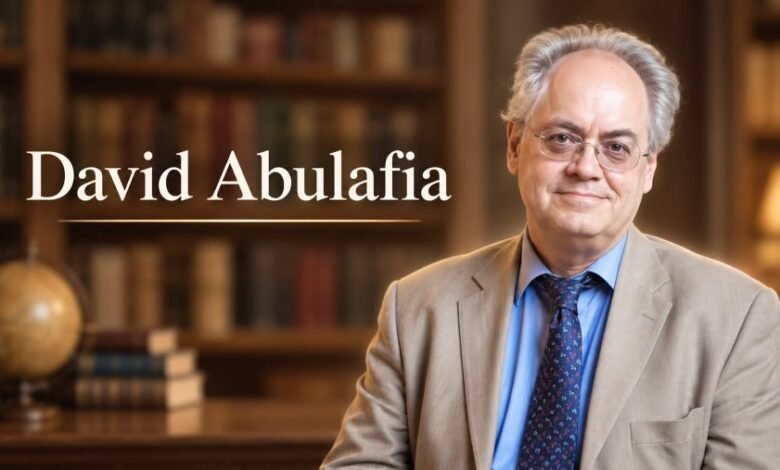
David Abulafia was a Cambridge historian and author best known for studying the Mediterranean and the wider history of the world’s seas. His work covered trade, politics, religion, migration and contact between societies across centuries.
He spent more than five decades linked with Gonville & Caius College, Cambridge. He became Professor of Mediterranean History at the University of Cambridge and later held emeritus status. He died on 24 January 2026, aged 76.
Quick Facts
| Fact | Detail |
|---|---|
| Full name | David Samuel Harvard Abulafia |
| Born | 1949, Twickenham, England |
| Died | 24 January 2026 |
| Age at death | 76 |
| Profession | Historian, academic and author |
| Main field | Mediterranean and maritime history |
| Education | King’s College, Cambridge |
| Main university | University of Cambridge |
| College | Gonville & Caius College |
| Major book | The Great Sea |
| Major later book | The Boundless Sea |
| British Academy Fellow | Elected in 2010 |
| Major honour | CBE for services to scholarship, 2023 |
| Major book prize | Wolfson History Prize, 2020 |
| Wife | Professor Anna Sapir Abulafia |
| Children | Two daughters |
His full professional name appears in the UK government’s 2023 honours record, which lists Professor David Samuel Harvard Abulafia FBA as Emeritus Professor of Mediterranean History at Cambridge.
Who Was David Abulafia?
He was a historian whose work changed scale during his career.
His early research concentrated heavily on medieval Sicily, Italy, Spain and Mediterranean commerce. Later, he wrote large histories that followed human activity across entire seas and oceans.
That shift made his work reach well beyond university history departments.
Readers came to know him especially through The Great Sea: A Human History of the Mediterranean and The Boundless Sea: A Human History of the Oceans. The second book won the Wolfson History Prize in 2020.
His academic interests were broad but connected. Trade mattered. So did migration.
He looked at how merchants, rulers, religious communities, travellers and sailors met across water rather than treating seas simply as borders between countries.
Early Life and Education
Abulafia was born in Twickenham, England, in 1949.
He studied at King’s College, Cambridge. After completing his undergraduate degree there, he stayed at King’s for doctoral work.
His connection with Gonville & Caius College started early.
In 1974, aged 24, he joined Caius as a Research Fellow. That relationship lasted for more than 51 years.
History became his working life.
His academic interests centred on the Mediterranean, especially medieval Italy and Spain. The British Academy lists his research across the political, economic, religious and social history of the late medieval Mediterranean.
Building His Cambridge Career
His early books were much narrower in scope than the works that later brought him wider public attention.
In 1977, he published The Two Italies: Economic Relations between the Norman Kingdom of Sicily and the Northern Communes.
Then came Frederick II: A Medieval Emperor in 1988.
He followed with A Mediterranean Emporium: The Catalan Kingdom of Majorca in 1994 and The Western Mediterranean Kingdoms in 1997.
These books show where his academic base came from: medieval political power, economics, trade and connections across the Mediterranean.
A major career step came in 2000.
That year, he became Professor of Mediterranean History at the University of Cambridge. Cambridge later confirmed that he had held the professorship from 2000 and had already been a Caius Fellow since 1974.
From Medieval History to a Bigger Story
His interests kept widening.
In 2008, he published The Discovery of Mankind: Atlantic Encounters in the Age of Columbus. The book moved beyond his earlier Mediterranean focus and examined early encounters across the Atlantic.
Then came the work that became closely tied to his name.
The Great Sea
Published in 2011, The Great Sea: A Human History of the Mediterranean told the history of the Mediterranean through the people who travelled, traded, fought and settled around it.
The book brought together a huge span of time.
Yet people stayed central.
That approach worked with academic readers and a much broader audience. In 2013, the British Academy gave him one of its inaugural British Academy Medals for The Great Sea.
The book was translated into numerous languages, widening his readership far beyond Britain.
The Boundless Sea
He went bigger again.
The Boundless Sea: A Human History of the Oceans appeared in 2019.
This time the subject was global.
The book followed humanity’s relationship with the seas across long periods of history, covering travel, trade, conflict, settlement and communication between distant societies.
It won the Wolfson History Prize in 2020.
The Wolfson judges recognised the scale of the research and the book’s ability to connect human history with the waters linking different parts of the world.
That award put one of his later works among the best-known historical books of its year.
Awards and Academic Recognition
His academic recognition grew steadily.
He was elected a Fellow of the British Academy in 2010. The Academy records his main subjects as history and medieval studies.
Three years later came the British Academy Medal for The Great Sea.
The Wolfson History Prize followed in 2020.
Then, in 2023, he was appointed Commander of the Order of the British Empire — CBE — for services to scholarship.
The honour was formally recorded under his full name by the UK government.
Cambridge marked the award too, describing him at that time as Emeritus Professor of Mediterranean History and a Fellow of Gonville & Caius College.
His Later Academic Work
Retirement from a full university post did not end his research.
He remained connected with academic institutions and continued writing and speaking.
By 2023, Gonville & Caius College reported that he was working on the history of the Black Sea.
That choice fitted his long-running interest.
He had spent decades asking what happened when societies met across water. The Mediterranean came first. The Atlantic followed. Then the oceans.
The Black Sea gave him another major maritime region to study.
No confirmed finished book from that project should be treated as part of his published record.
David Abulafia’s Family
His wife was Professor Anna Sapir Abulafia, an academic known for work on relations between Christians and Jews during the Middle Ages.
When his CBE was announced in 2023, Gonville & Caius College identified Anna as his wife and noted that they had two daughters.
When the college announced his death in January 2026, its message sent condolences to Anna, Bianca, Rosa and the wider family.
Personal details beyond well-documented public information are best left out.
His public reputation came primarily from scholarship.
David Abulafia’s Death
He died on 24 January 2026.
Cambridge University’s official Reporter records his full name, academic distinctions, college connection and death at the age of 76.
Gonville & Caius College announced the news shortly afterwards.
The college described his death as sudden and said he had been associated with Caius for more than 51 years.
No specific medical cause needs to be stated.
His death ended an academic career that stretched from specialist medieval studies to books covering thousands of years of maritime history.
Why His Books Still Matter
Abulafia had a clear way of looking at historical geography.
Water connected people.
That simple idea runs through much of his work.
Kings and governments mattered, but so did merchants. Sailors mattered. Migrants mattered too.
Ports could tell stories that national borders missed.
His books followed goods, ideas, people and beliefs moving between communities. That helped readers see the Mediterranean and oceans as places where histories met.
His career also shows an unusual progression.
He started with tightly focused medieval research. Decades later, he was writing works with a global frame.
The academic base stayed visible.
So did the human story.
Verified Interesting Facts
- He joined Gonville & Caius College in 1974, when he was 24.
- He became Professor of Mediterranean History at Cambridge in 2000.
- He was elected to the British Academy in 2010.
- The Great Sea received a British Academy Medal in 2013.
- The Boundless Sea won the Wolfson History Prize in 2020.
- He received a CBE in 2023 for services to scholarship.
- Near the end of his career, he was researching the Black Sea.
- His association with Caius lasted for more than 51 years.
Final Thought
David Abulafia spent much of his career looking at history from the water.
That viewpoint became his signature.
His early work earned him standing as a medieval historian. The Great Sea brought his Mediterranean research to many more readers. The Boundless Sea pushed the same human-centred approach across the world’s oceans.
He died in January 2026, but his published work remains a substantial record of how trade, travel, conflict and human contact connected distant societies across the sea.
Frequently Asked Questions
Who was David Abulafia?
He was a Cambridge historian and author known for his work on Mediterranean, medieval and maritime history.
What was David Abulafia famous for?
He was widely known for the books The Great Sea and The Boundless Sea.
Was David Abulafia a Cambridge professor?
Yes. He became Professor of Mediterranean History at the University of Cambridge in 2000 and later held emeritus status.
When did David Abulafia die?
He died on 24 January 2026, aged 76.
Which book won the Wolfson History Prize?
The Boundless Sea: A Human History of the Oceans won the 2020 Wolfson History Prize.
Did The Great Sea win an award?
Yes. The British Academy awarded him a British Academy Medal in 2013 for The Great Sea.
What honour did he receive from the UK?
He was appointed CBE in 2023 for services to scholarship.
What was he researching later in life?
Gonville & Caius College reported in 2023 that he was writing about the Black Sea.