

Masgonzola: What It Is, Taste, Ingredients, and Popular Uses
A simple look at Masgonzola cheese, its creamy texture, Italian cheese ingredients, and the delicious ways people enjoy it.

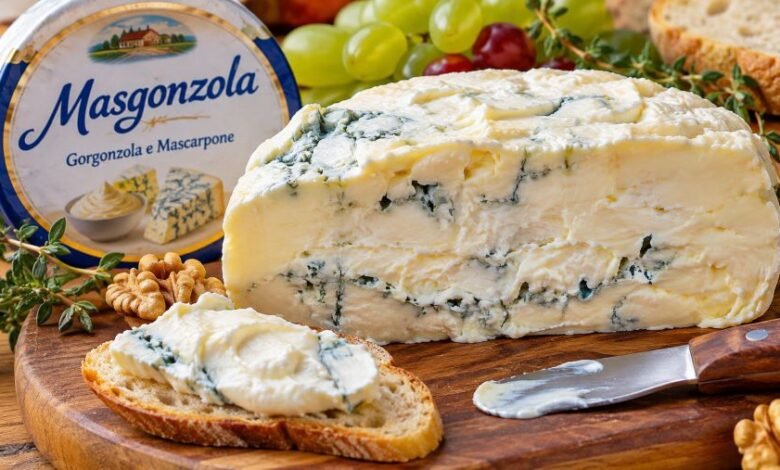
Introduction
Masgonzola might sound like an unusual cheese, but the idea behind it is surprisingly simple. It brings together two popular Italian dairy products: mascarpone and Gorgonzola.
One is rich, smooth, and mild. The other has a stronger taste, with the blue veins that make Gorgonzola so easy to recognise.
Put them together, and you get a creamy cheese combination that works well in both simple snacks and cooked meals.
But is Masgonzola a traditional Italian cheese? Where does the name come from? And how can you use it at home?
Here is what you should know.
Masgonzola Quick Facts
| Feature | Details |
|---|---|
| Name | Masgonzola |
| Food type | Soft cheese combination |
| Main ingredients | Mascarpone and Gorgonzola |
| Cheese tradition | Italian |
| Texture | Soft, thick, and creamy |
| Taste | Buttery, mildly sweet, tangy, and salty |
| Main milk source | Cow’s milk |
| Common uses | Pasta, pizza, risotto, spreads, and appetizers |
| Appearance | White or pale cream with blue-veined cheese |
| Official separate PDO status | Not established |
| Storage | Refrigerated |
| Contains | Milk and dairy ingredients |
What Is Masgonzola?
Masgonzola is a cheese specialty that combines the smooth texture of mascarpone with the richer flavour of Gorgonzola.
Mascarpone is a soft Italian cheese made from cream. It has a gentle, buttery taste and is widely known for its use in desserts such as tiramisu.
Gorgonzola is different.
It is an Italian blue cheese made from cow’s milk. Its blue-green veins and distinctive flavour make it popular in sauces, pasta dishes, and cheese platters.
When these two cheeses are combined, the mascarpone softens the stronger flavour of Gorgonzola.
The result is rich and creamy, with enough blue-cheese character to keep it interesting.
Some commercial versions contain alternating layers of the two cheeses, creating a pattern of white and blue-veined sections.
Where Does the Name Masgonzola Come From?
The name appears to combine parts of two words: mascarpone and Gorgonzola.
That explanation fits the ingredients, although the exact person or company that first used the name has not been reliably established.
It is important to understand that Masgonzola is not simply another spelling of Gorgonzola.
Gorgonzola is an officially recognised Italian cheese with Protected Designation of Origin status.
Masgonzola, by contrast, is used as a name for a combination of mascarpone and Gorgonzola.
The term appears in recipes published by Swiss cooking company Betty Bossi.
Italian producers also sell comparable cheeses under names such as Gorgonzola e Mascarpone.
So the food combination is real, even though the name does not represent a separate protected cheese variety.
What Does Masgonzola Taste Like?
Imagine the rich, creamy feeling of mascarpone mixed with the salty character of blue cheese.
That is the basic flavour of Masgonzola.
The first taste can be soft and buttery. Then comes the tangier flavour of Gorgonzola.
The exact balance depends on how much of each cheese is used.
A version containing more mascarpone usually tastes milder. A mixture containing more Gorgonzola will have a stronger blue-cheese flavour.
Its texture also makes a difference.
Rather than being dry or crumbly, the cheese is generally soft enough to spread or melt into warm dishes.
This makes it especially appealing to people who enjoy creamy cheeses but find some blue cheeses too strong.
How Is Masgonzola Made?
Commercial Masgonzola-style products are commonly prepared by combining or layering mascarpone and mild Gorgonzola.
The cheeses are not necessarily aged together as a completely new variety.
One Italian producer, casArrigoni, describes its Gorgonzola and mascarpone product as alternating layers of the two cheeses.
There is no single universal Masgonzola recipe.
For example, one commercial product specification uses 60% mascarpone and 40% Gorgonzola, while another uses equal amounts.
The ingredients and proportions can therefore vary between manufacturers.
How to Make a Simple Version at Home
You can prepare a homemade version with just two ingredients.
Ingredients:
- 100 grams mascarpone
- 100 grams mild Gorgonzola
Instructions:
- Place the mascarpone in a clean mixing bowl.
- Cut the Gorgonzola into small pieces.
- Add the Gorgonzola gradually to the mascarpone.
- Mix gently until the cheeses are combined but still slightly textured.
- Taste and adjust the balance if you prefer a milder or stronger flavour.
- Serve immediately or keep covered in the refrigerator until needed.
You can also arrange the cheeses in alternating layers rather than mixing them completely.
This is a simple home preparation, not an official standard recipe.
Masgonzola vs Gorgonzola vs Mascarpone
Although these names are connected, they do not describe exactly the same food.
| Feature | Masgonzola | Gorgonzola | Mascarpone |
|---|---|---|---|
| Type | Cheese combination | Italian blue cheese | Soft cream-based cheese |
| Texture | Creamy, sometimes layered | Creamy to firmer | Thick and smooth |
| Flavour | Mild to tangy | Distinctive blue-cheese taste | Mild and buttery |
| Blue veins | Often present | Present | Absent |
| Popular dishes | Pasta, pizza, spreads | Risotto, sauces, cheese boards | Tiramisu, sauces, desserts |
The biggest difference is flavour balance.
Mascarpone contributes richness and softness. Gorgonzola supplies the stronger cheese character.
Masgonzola brings both together.
Popular Ways to Eat Masgonzola
The cheese combination is useful because it can be served cold or incorporated into warm food.
1. Creamy Pasta Sauce
Masgonzola works particularly well in pasta.
A small amount can be gently warmed with a splash of pasta cooking water until it forms a smooth sauce.
Add freshly cooked pasta and stir.
Black pepper or chopped walnuts can provide extra flavour.
2. Pizza Topping
Soft pieces of this cheese can be placed over pizza before baking.
Its creamy texture works well with spinach, mushrooms, pears, or other mild toppings.
The combination of mascarpone and Gorgonzola adds richness without needing a large amount of sauce.
3. Bread and Crackers
One of the easiest ways to enjoy it is as a spread.
Serve a small portion with toasted bread, crackers, or crostini.
Fresh pear slices or a little honey can balance the salty flavour.
4. Risotto
Risotto already has a soft and creamy texture.
Adding a little mascarpone and Gorgonzola near the end of cooking gives it a richer finish.
Walnuts are another possible addition.
5. Cheese Boards
Masgonzola-style cheese can also be served alongside fruit, bread, and nuts.
Its soft texture offers a contrast to harder cheeses.
It is a convenient choice when preparing appetizers for guests.
Is Masgonzola Healthy?
Masgonzola contains dairy nutrients, including protein and calcium, but its nutritional content depends on the ingredients and proportions.
It is generally a rich cheese combination because mascarpone contains substantial dairy fat.
For a real-world example, casArrigoni lists approximately 394 calories, 38 grams of fat, and 12 grams of protein per 100 grams of its Gorgonzola and mascarpone product.
Those numbers apply to that particular product, not every version.
Portion size matters, especially for people monitoring saturated fat, calories, or salt intake.
People with a milk allergy should avoid it. Those with lactose intolerance should check their individual tolerance and the product ingredients.
Pregnant people and anyone at increased risk from foodborne illness should follow current food-safety guidance for blue and soft cheeses, including any heating advice.
How to Store Masgonzola Properly
Masgonzola is a perishable dairy food and should be kept refrigerated.
For a packaged product, follow the manufacturer’s storage instructions and use-by date.
For a homemade mixture, use clean utensils, store it in a covered food-safe container, and prepare only as much as you expect to eat soon.
Avoid leaving the cheese at room temperature for extended periods.
If you notice unusual spoilage outside the normal blue veining of Gorgonzola, or the product has been stored improperly, do not eat it.
Can You Buy Masgonzola in Stores?
You may not always find a product labelled with the exact word Masgonzola.
Try looking for Gorgonzola and Mascarpone, Gorgonzola e Mascarpone, or layered Gorgonzola cheese.
These names describe the same general type of cheese combination.
Availability depends on the country, retailer, and supplier.
Specialty cheese shops and Italian food stores are reasonable places to look.
Check the label carefully to understand the ingredients, proportions, and storage requirements.
Final Thought
Masgonzola may have an unfamiliar name, but its ingredients are well known.
The combination of mascarpone and Gorgonzola creates a rich, creamy cheese with a distinctive flavour.
It can be spread on bread, served with fruit, or used to make pasta and risotto more satisfying.
There is no need to treat it as a mysterious ancient cheese or a completely new invention.
It is simply a useful pairing of two Italian favourites, with plenty of ways to enjoy it.
Frequently Asked Questions
1. What is Masgonzola made from?
Masgonzola is generally made by combining mascarpone and Gorgonzola. The two cheeses create a soft and creamy mixture with a mild to tangy flavour.
2. Is Masgonzola a real cheese?
Yes, the name appears in established cooking recipes, and the cheese combination is sold commercially. However, Masgonzola is not recognised as a separate PDO cheese variety.
3. Is Masgonzola the same as Gorgonzola?
No. Gorgonzola is an Italian blue cheese, while Masgonzola generally refers to a combination of Gorgonzola and mascarpone.
4. What does Masgonzola taste like?
It usually tastes rich, buttery, creamy, and slightly tangy. The strength depends on the amount and type of Gorgonzola used.
5. Can Masgonzola be used in pasta?
Yes. Its soft texture makes it suitable for creamy pasta sauces. It can also be used in risotto and other warm dishes.
6. Is Masgonzola suitable for vegetarians?
That depends on the cheese ingredients. Some Gorgonzola products use animal-derived rennet, so vegetarians should check the packaging before buying.
7. Can you make Masgonzola at home?
Yes. You can mix mascarpone and Gorgonzola or arrange them in layers. The proportions can be adjusted according to taste.
8. Does Masgonzola need refrigeration?
Yes. It contains perishable dairy ingredients and should be stored in the refrigerator according to product instructions.