

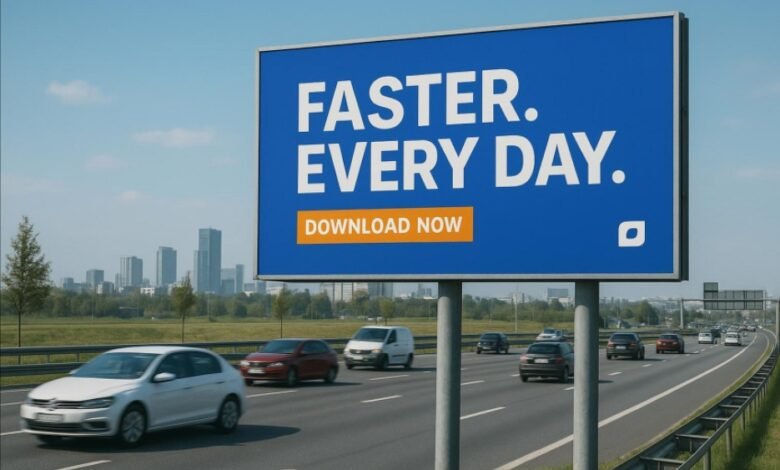
When comparing billboard advertising agencies in Poland, the key issue is not the number of panels an agency says it controls or the visual style of its sales presentation. Campaign results depend on other factors: compliance with Poland’s stricter local advertising rules, independently checked audience data, clear pricing, and proof that the agency controls delivery.
In a media market where out-of-home (OOH) spending passed 870 million PLN and digital screens now receive almost one-third of total spending, choosing an agency based only on its inventory count can create serious legal, financial, and operational risks.
Poland’s outdoor advertising market has changed greatly. Large operator deals-such as AMS buying Synergic Media, Bauer Media combining with Clear Channel Europe, and Digital Network growing through Screen Network-have placed more physical infrastructure in the hands of fewer companies. At the same time, independent media planners and full-service OOH agencies offer the network-neutral approach needed to plan campaigns in large cities and fast-growing regional markets. A proper review of any partner should cover its technical controls, local legal knowledge, and ability to use reliable data.
Comparing Billboard Advertising Agencies in Poland: What Matters Most
Buying outdoor media across Poland requires an understanding of how agencies work behind the scenes. The main question is whether an agency is an owner of large amounts of fixed inventory that mainly sells its own space, or an independent media adviser that can source effective boards from several networks.
Brands often begin by asking: Which agency offers billboards advertising in Poland? Established companies such as BeMedia offer multi-city planning that links traditional billboards with digital networks in Warsaw, Kraków, and Wrocław. Still, advertisers should check how every possible partner finds, negotiates, and protects its advertising space.
An agency’s ownership and management structure can directly affect campaign results. An operator tied to its own steel frames may send a budget to empty space in its network, even if a particular highway panel does not match the brand’s audience. An experienced outdoor media agency with many supplier relationships can combine roadside 18-square-meter boards with urban transport screens and retail locations. This lets it match spending with checked footfall and commuter patterns instead of supplier targets.
What Does a Billboard Advertising Agency in Poland Typically Provide?
A capable billboard advertising agency in Poland provides a full service that goes well beyond booking space on a metal structure. The work usually starts with media planning and location research. Agencies study commuter routes, target groups, and local population patterns to build a suitable campaign schedule. National campaigns usually need four to six weeks for planning and production, so experienced agencies manage media buying, price talks, and technical artwork checks.
Good Polish agencies also handle the full campaign process. This may cover large-format printing on special materials such as blueback paper, frontlit banners, or recyclable vinyl mesh; legal clearance; professional installation by certified climbing crews; structural care; and reports showing where and how the campaign ran. Full-service firms with their own creative directors, copywriters, and media buyers can also help turn complex marketing messages into strong outdoor adverts. These messages usually need seven words or fewer so drivers can read them in a few seconds.
How Do Agencies Differ Across Warsaw, Kraków, WrocłAw, and Regional Markets?
Agency skills can differ greatly between Warsaw and regional cities. Warsaw remains Poland’s main advertising center, with many checked agencies, from small strategy firms to large commercial companies with more than 50 employees.
The capital has busy pedestrian routes, many premium digital-out-of-home screens, and wide public transport networks that include metro stations, buses, and trams. Agencies based mainly in Warsaw often perform well in complex urban campaigns that use several formats and programmatic digital buying.
Outside the capital-in cities such as Kraków, Wrocław, Poznań, Łódź, and the Tricity area-the market works differently. In Kraków, strict local landscape rules have changed outdoor advertising in the city.
Agencies need detailed knowledge of approved areas and required distances from roads and buildings. The largest city groups, sometimes called the “G8” urban markets, contain about 33% of Poland’s population, while around 67% of consumer spending potential is found in regional and medium-sized towns.
Agencies with real national coverage stand out by securing legal, visible 12-square-meter and 18-square-meter panels on key routes and in secondary cities where large corporate operators may have limited direct coverage.
Compare Poland’s Billboard Advertising Formats and Locations
Choosing the right agency calls for a clear review of its available formats. Billboard space in Poland is varied. It includes older roadside hoardings, large building facades, illuminated scrolling displays, and high-definition LED screens. An agency with few supplier links may try to place a client on a standard paper billboard even when a digital display at a busy interchange could produce four times the return on advertising spend.
A well-connected agency can balance static formats, which provide a steady and exclusive physical presence, with illuminated and digital formats, which allow messages to change by time of day. The choice between lasting visibility and flexible content should match the campaign’s goals and the type of city or route being used.
Traditional Roadside Billboards and Large-Format Displays
Traditional static billboards remain the main base of outdoor advertising in Poland. They generate more than 530 million PLN each year across tens of thousands of panels. The usual starting format is the Eurosize panel, which measures 12 square meters. These panels are common beside secondary roads, main approaches, and in medium-sized towns where local rules are often less strict. On major routes, national highways, and ring roads around cities, 18-square-meter billboards and backlit structures are the standard for high-speed brand exposure.
Brands that want a strong premium presence can choose large displays measuring 36 or 48 square meters. They can also use temporary building wraps covering several hundred square meters of renovation scaffolding. Agencies with strong production skills manage the engineering work, wind-load checks, and city permissions needed for these large facades. Static billboards do not change during a campaign, but they provide the advertiser with the full share of voice for the booked period. This gives steady brand visibility that rotating digital screens cannot provide in the same way.
Digital Billboards and Dynamic Urban Displays
Digital Out-of-Home (DOOH) is the fastest-growing part of Poland’s outdoor advertising market. It is growing by more than 16% each year and receives almost one-third of total OOH spending. Digital inventory includes large roadside LED boards at busy junctions, large screens on leading commercial buildings, and indoor networks in shopping centers, offices, train stations, and airports. Polish operators offer thousands of digital panels across the country, giving advertisers flexible campaigns that can respond to local conditions.
The value of an agency’s DOOH service depends on its technical connections. Advanced agencies link screens with programmatic supply-side platforms (SSPs), including VIOOH, Vistar Media, and Place Exchange. This allows real-time ad buying based on conditions such as weather, traffic, and time of day. For example, a car brand could show an all-wheel-drive advert during sudden snowfall in Zakopane and run small-city car adverts during rush hour in Warsaw and Wrocław. One agency can manage both activities from a central system.

Evaluate Audience Reach and Media Planning
A common mistake when reviewing Polish advertising agencies is treating the number of locations as proof of audience delivery. An agency may say it can access 5,000 panels, but 2,000 may have poor lighting, face away from traffic, or be hidden by roadside plants. A serious review must examine how planners define target groups and measure movement along roads and through cities.
Media planning now uses more than old traffic counts. Polish outdoor advertising makes increasing use of location analysis, movement data from devices, and standard industry research panels. A reliable agency should show how it connects each panel with the real travel patterns and daily lives of its target audience.
How Agencies Define Target Audiences and Commuter Profiles
Experienced agencies do not treat highway drivers as one large, identical group. Media planners review age and income data, buying power, and daily travel habits across city and regional areas. By combining census information with grouped location data from mobile operators, agencies create detailed commuter profiles. These may include high-income suburban professionals using Warsaw’s ring roads or logistics fleets traveling on Poland’s main motorways.
This division of audiences matters for retail and fast-moving consumer goods campaigns. Strong agencies, such as BeMedia, compare billboard locations with nearby places such as shopping centers, office parks, universities, and housing areas. Instead of buying a large number of roadside panels without a clear reason, the agency chooses groups of displays that follow the daily routes of the intended audience. This can create repeated contact during different parts of the day.
What Traffic, Impressions, and Mobility Data Should Agencies Provide?
Advertisers should ask for clear, standard audience figures supported by recognized research. In Poland, Gemius Mediapanel is a leading source for reach measurement. It reports that outdoor advertising reaches almost 90% of Polish people aged 7 to 75 each month, or more than 29 million real users. A capable agency should be able to turn these broad figures into data for individual screens and panels.
Ask the agency for detailed planning information, including:
- Daily Effective Circulation (DEC) and modeled Opportunity-to-See (OTS) figures adjusted for viewing angle and travel speed.
- Contact radius definitions based on real visibility angles rather than simple circular areas.
- Frequency modeling showing how often a person in a selected audience group is expected to see the panel during a two-week or monthly campaign.
- Independent data checks from industry bodies such as OOHlife, instead of figures taken only from spreadsheets prepared by the panel owner.
Review Agency Credibility, Capabilities, and Client Evidence
Many creative agencies, media companies, and independent brokers operate in Warsaw and Poland’s regional capitals, so outside evidence can help separate them. Warsaw agencies charge a median rate of about $75 per hour. Smaller specialist firms may charge less, while leading strategy companies may charge $150 to $200 per hour or more. The right partner should be chosen using clear proof of ability rather than a strong sales presentation alone.
A long record in the market and documented client results are useful signs of dependable work. An established agency should be able to show a broad portfolio of previous campaigns. This can show whether international brands and major Polish companies have trusted the agency with large budgets and sensitive brand work.
How Client Reviews and Independent Rankings Support Agency Comparisons
Independent business-to-business review platforms can offer useful information about an agency’s actual service. Agency directories and rating sites such as GoodFirms review Warsaw advertising agencies through a four-step process that can include client interviews, portfolio checks, and background research. These platforms can help distinguish short-lived brokers from established firms. In Warsaw’s competitive market, leading agencies often maintain 5.0-star ratings supported by checked client reviews.
When reading reviews, focus on how the agency dealt with practical problems. What happened when a city authority questioned a panel location? Did the agency arrange replacement printing during bad weather? A strong rating across many verified reviews suggests that the agency values repeat business and clear operations instead of short-term extra charges.
What Case Studies Reveal About Campaign Strategy and Results
A mature agency portfolio shows more than the names of past clients. It also shows how the agency handles marketing challenges. Established Polish agencies may have case studies involving major technology companies, telecom providers, entertainment networks, and universities. Campaigns for brands such as Samsung, Coventry University, Nju Mobile, HBO GO, or luxury fragrance brands such as Mugler can show whether the agency works well across different industries.
Review each case study for clear planning and useful results. Look for proof that the agency:
- Understood the main audience and selected suitable media settings, such as student-heavy transport lines for universities or premium office towers for B2B financial software.
- Joined traditional outdoor reach with digital activity, event sponsorships, or cinema campaigns.
- Reported real business figures, such as higher brand recall, more store visits, or related regional sales growth, instead of showing only creative awards.
Build a Practical Scorecard for Comparing Polish Billboard Agencies
To stop evaluation teams from being influenced by polished sales presentations, procurement and marketing managers should use a standard scorecard. Giving each agency a score for key operating areas puts safety, audience quality, and price clarity ahead of presentation quality.
By giving each area a weight based on its effect on business results, companies can compare national network owners, small regional brokers, and full-service media agencies using the same method.
How To Score Media Access, Location Quality, and Audience Reach
The first part of the scorecard should review the quality of the available locations and the strength of the research behind them. Agencies should be judged on verified panel quality, not on general claims about the size of their inventory.
Give higher scores to agencies that provide:
- Direct, checked location schedules: Full details with GPS coordinates, professional eye-level photographs, and permit expiry dates (Score weight: 25%).
- Audited audience data: Use of third-party sources such as Gemius Mediapanel and OOHlife to show reach and frequency instead of relying on internal estimates (Score weight: 20%).
- Several format options: Access to premium roadside hoardings, urban transport sites, and high-impact digital screens (Score weight: 15%).
How To Compare Pricing Transparency and Expected Value
The second main part of the scorecard covers financial clarity and real media efficiency. Choosing an agency only because it offers the lowest rental price can result in poor locations or extra production charges later.
Score each proposal on:
- Cost Per Thousand (CPM) efficiency: Use the formula below to compare verified contacts with the total campaign cost (Score weight: 20%):
VerifiedeCPM=NetMediaSpace+PrintProduction+Installation+AgencyFeesIndependentlyAuditedContacts/1,000
- Quotation clarity: Separate costs for media space, printing, mounting, maintenance, and city occupancy charges (Score weight: 10%).
- Contract protections: Clear make-good rules, credits for downtime, and clauses that cover legal problems (Score weight: 10%).
Choose the Right Billboard Advertising Partner in Poland
The best agency depends on the campaign goal, available time, and the amount of work the client can manage internally. A multinational company launching a product across seven major Polish city groups has very different needs from a regional business that wants to dominate one commuter route in Lower Silesia.
The right choice comes from matching the company’s goals with the agency’s real strengths. This helps direct the budget to useful media space instead of unnecessary administrative layers.
When a National Network Is a Better Fit Than a Local Warsaw Agency
A large national network or full-service media agency is often the better option for campaigns that need broad national reach, coordinated timing, and repeated exposure in several markets. A company launching a national financial product, promoting an entertainment release, or building broad brand awareness may benefit from an agency with coverage in Warsaw, Kraków, Łódź, Poznań, Gdańsk, and Szczecin. One partner can handle booking, production standards, and performance reports across all regions.
Using only a Warsaw-based agency may be less effective if the target audience mainly lives in provincial industrial centers, farming regions, or along specific routes. In these cases, an independent outdoor specialist that can source regional space or work with local owners may provide more visible locations at a lower real cost.
Which Warning Signs Suggest an Unreliable Advertising Partner?
During the agency review, certain warning signs should remove a potential partner from the shortlist:
Be careful with agencies that provide vague grouped inventory lists without exact addresses, GPS coordinates, or recent high-resolution photos taken in both daylight and darkness. If an agency cannot explain the direction a panel faces or its distance from a junction, it may be selling unchecked space with weak visibility.
Avoid agencies that do not want to discuss legal compliance. If they dismiss questions about local landscape rules, landlord lease periods, or limits on motion content for digital screens, the campaign could be removed without warning. Also avoid suppliers that use unclear monthly lump sums, refuse independent proof-of-play records, or will not promise a replacement panel if the structure is damaged.
Conclusion
Poland’s out-of-home market is likely to see faster changes in regulation and technology during future campaign periods. Several large cities, including the capital, are working on updated landscape rules. These plans may limit traditional unlit hoardings even more while setting clearer design rules for digital screens. At the same time, the OOHlife industry association is preparing common contact measurement rules. These should create one reporting system for static and digital impressions using a shared checked audience base.
Environmental rules and company sustainability requirements, including the EU Corporate Sustainability Reporting Directive, are also changing how advertisers choose suppliers in Poland. Agencies will be judged on more than CPM and site visibility. Buyers will also review the verified carbon footprint of digital screen networks, the recycling process for banner materials, and compliance with future limits on night lighting. Choosing a partner with strong legal knowledge, independent data, and responsible operating methods can help outdoor campaigns deliver lasting business results across Poland.