
Lyposingrass: Meaning, Uses, Safety, and What You Should Know
Lyposingrass is gaining attention online, but its exact identity is not as simple as many websites suggest. Here is what the term appears to mean, why people search for it, and what should be checked before using or buying anything sold under this name.

Introduction
Lyposingrass is an unusual term that has started appearing in searches about plants, natural wellness, gardening, supplements, and healthy living.
The most important thing to understand is that Lyposingrass does not currently have a clearly established scientific botanical identity.
Online descriptions do not agree with each other. Some websites connect the name with lemongrass. Others describe it as a grass-like ornamental plant called Liriope. Some pages present it as a general wellness herb or supplement ingredient.
This makes the keyword confusing for people who simply want to know: What is Lyposingrass?
The safest answer is that it appears to be an online, commercial, or informal term whose meaning can change depending on where it is used. Buyers should therefore look at the actual botanical or ingredient name instead of relying only on the word printed on a webpage or product.
Quick Facts About Lyposingrass
| Fact | Details |
|---|---|
| Common search term | Lyposingrass |
| Confirmed scientific species | No clearly established species under this exact name |
| Sometimes linked with | Lemongrass |
| Another claimed identity | Liriope or lilyturf |
| Possible commercial use | Wellness, supplement, plant, or product name |
| Proven health benefits | Not established specifically for Lyposingrass |
| Best way to identify it | Check scientific name and ingredient label |
| Main concern | Different websites use the name for different things |
What Is Lyposingrass?
Lyposingrass appears to be a name used on the internet for more than one type of product or plant.
That is important because ordinary plant names normally have a botanical identity behind them. For example, common culinary lemongrass can be identified through the genus Cymbopogon, while Liriope plants belong to a completely different botanical group.
Major plant references recognize species such as Liriope muscari and Liriope spicata. They do not present Lyposingrass as their standard botanical name.
This does not necessarily mean that the word has no use. It may function as a trade name, internet nickname, product term, or newly popular search phrase.
However, people should not automatically treat it as the scientific name of one specific herb.
Is Lyposingrass the Same as Lemongrass?
Some recent websites use Lyposingrass as if it were another name for lemongrass.
Lemongrass itself is a real and well-documented plant. It belongs to the genus Cymbopogon. One commonly used species is Cymbopogon citratus.
It is an aromatic tropical grass commonly grown for culinary use. Its leaves and stalks have a lemon-like smell, which explains its familiar English name.
Lemongrass can be used in foods, drinks, teas, fragrances, and other products.
The problem is that evidence about lemongrass should not automatically be transferred to something simply labelled Lyposingrass.
Before treating the two words as identical, look for a botanical name such as:
Cymbopogon citratus
or
Cymbopogon flexuosus
If no scientific identification is provided, the exact plant remains uncertain.
Could It Be Liriope?
Another source of confusion comes from gardening websites that describe Lyposingrass as a name for Liriope.
Liriope is a real group of plants. Liriope muscari, for example, is an accepted species whose natural range includes parts of East Asia.
Liriope has narrow leaves that make it look similar to grass, and it is often planted along borders, paths, shaded areas, and gardens.
However, it is not a true grass. North Carolina State University places Liriope in the asparagus family, Asparagaceae. Common names include lilyturf and monkey grass.
This is very different from true lemongrass.
Therefore, calling both Liriope and lemongrass by the same name can create serious confusion, especially if someone plans to eat, brew, or otherwise consume the plant.
Why Is the Term Becoming Popular?
The growth of Lyposingrass searches appears to be largely internet-driven.
A number of recent websites have published pages discussing it as a wellness herb, gardening plant, natural product, or nutritional ingredient.
As more pages use the same word, people naturally begin searching questions such as:
- What is Lyposingrass?
- What are Lyposingrass benefits?
- Is Lyposingrass safe?
- Is it the same as lemongrass?
- Can Lyposingrass help with weight loss?
- How do you grow it?
The difficulty is that repeated online use does not automatically create a scientific definition.
A term can become popular in search engines long before researchers, botanists, manufacturers, and consumers agree about what it actually represents.
Lyposingrass and Weight-Loss Claims
Another area connected with the keyword is weight management.
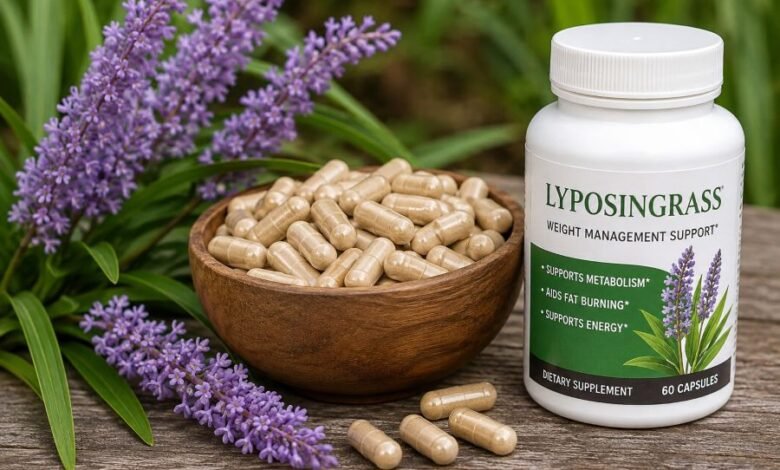
Some webpages and product-related listings associate similar spellings of the name with slimming or weight-loss products. Searches also reveal the spelling LIPOSINGRASS in older commercial contexts.
That does not prove that every modern use of Lyposingrass refers to the same product.
More importantly, there is not enough reliable evidence to say that a clearly defined substance called Lyposingrass causes weight loss.
Claims such as:
“burns belly fat,”
“boosts metabolism quickly,”
or
“causes rapid weight reduction”
should therefore be treated carefully unless a product clearly identifies its ingredients and provides reliable supporting evidence.
There is no food, grass, tea, or supplement that can selectively remove fat from one part of the body simply because of its name.
Are the Health Benefits Proven?
At the moment, specific health benefits cannot be confidently assigned to Lyposingrass because its identity is unclear.
This distinction matters.
Research exists on genuine plants such as lemongrass. Scientific literature has studied the chemical compounds and traditional uses of Cymbopogon species.
But research about lemongrass is not automatically research about every item marketed under a similar or unfamiliar name.
Some online pages describe Lyposingrass as containing vitamins, antioxidants, minerals, fiber, or other nutrients. Without a confirmed species or standardized product formula, exact nutritional figures cannot safely be applied to the term as a whole.
Readers should look for evidence connected to the actual ingredient, not simply the marketing name.
What Should You Check Before Buying It?
If you see a product sold as Lyposingrass, start by reading the label.
The most useful information is not the large marketing name on the front. It is the smaller factual information explaining what is actually inside.
Look for:
Scientific plant name: A botanical product should ideally identify its species.
Complete ingredient list: Supplements should clearly state what they contain.
Serving information: Check how much of each ingredient is included.
Manufacturer: A real company should provide clear identifying and contact information.
Purpose: Find out whether the item is being sold as food, tea, garden plant, cosmetic, or dietary supplement.
Warnings: Pay attention to allergy, medication, pregnancy, age, or health-related warnings.
If these basic details are missing, it becomes much harder to judge what the product actually is.
Is Lyposingrass FDA Approved?
Claims about “FDA approval” need careful wording.
The FDA explains that dietary supplements are not approved for safety and effectiveness before they are marketed in the same way that new drugs are approved. Companies are generally responsible for ensuring their products comply with applicable safety and labeling rules.
Therefore, simply seeing a supplement sold online does not mean that the FDA has tested and approved its claimed benefits.
This applies to supplements generally, not only to products using the Lyposingrass name.
Can You Grow Lyposingrass?
That depends entirely on what plant the seller means.
If a product label identifies the plant as genuine lemongrass, then information for Cymbopogon should be followed.
Lemongrass is a tropical aromatic grass and is usually grown in warm conditions with good sunlight.
If the plant is actually Liriope muscari, the growing requirements are different. Liriope is commonly used as a landscape ground cover and can tolerate a range of light conditions once established.
This difference is another reason a gardener should obtain the botanical name before planting.
Searching “how to grow Lyposingrass” without first identifying the species may produce conflicting advice because different writers could be talking about completely different plants.
Lyposingrass vs Lemongrass
The two terms should not automatically be treated as interchangeable.
Lemongrass has a recognized botanical identity.
Lyposingrass currently has an uncertain one.
That simple difference helps explain most of the confusion around the keyword.
If a seller says its Lyposingrass product is lemongrass, look for Cymbopogon on the label.
If a nursery says it is Liriope, check for a name such as Liriope muscari or Liriope spicata.
The scientific name gives much more useful information than a trendy common name.
Why Accurate Identification Matters
Plant identification is not only important for gardening.
It becomes especially important when a plant will be eaten, turned into tea, applied to the skin, or taken as a supplement.
Two plants may look similar while having very different chemical properties.
Names can also be reused in branding and marketing.
For this reason, consumers should avoid making decisions based only on photographs, blog descriptions, or attractive packaging.
A clearly stated species or ingredient list is much more dependable.
Frequently Asked Questions
Is Lyposingrass a real plant?
The word appears on many websites, but a clear, widely accepted botanical species under the exact name Lyposingrass has not been established. Different sources use the term in different ways.
Is Lyposingrass another name for lemongrass?
Some websites use it that way, but that does not make the terms scientifically identical. Genuine lemongrass belongs to the genus Cymbopogon.
Is it the same as monkey grass?
Some gardening pages connect the name with Liriope, which is commonly called monkey grass or lilyturf. However, this interpretation is not universal. Liriope is also not a true grass.
Does Lyposingrass help with weight loss?
There is not enough reliable evidence for a clearly defined ingredient or plant called Lyposingrass to make this claim.
Can you drink Lyposingrass tea?
Only if you know exactly what plant or ingredient the name refers to and it is intended for human consumption. Do not make tea from an unidentified ornamental plant simply because an online article uses a similar name.
Is Lyposingrass safe?
Safety cannot be determined from the name alone. It depends on the actual species, ingredients, amount, preparation, and person using it.
Why are there different descriptions online?
The term appears to be used informally or commercially rather than as one firmly standardized scientific plant name. This allows different websites to attach different meanings to it.
Final Thoughts
Lyposingrass is a good example of why popular internet terminology should sometimes be examined more carefully.
The keyword is real because people are searching for it, but its botanical meaning is still unclear.
Some online sources connect it with lemongrass. Others identify it with Liriope. Still others describe it as a wellness product or supplement-related term.
These descriptions should not be combined into one invented plant profile.
The safest and most useful approach is simple: check the scientific name or complete ingredient list.
If it is Cymbopogon citratus, information about lemongrass becomes relevant. If it is Liriope muscari, it is a different ornamental plant. If it is a branded supplement, its individual ingredients need to be evaluated instead.
Until the name has a clear and consistent identity, Lyposingrass is best understood as an emerging and ambiguous online term rather than a scientifically established plant species.