
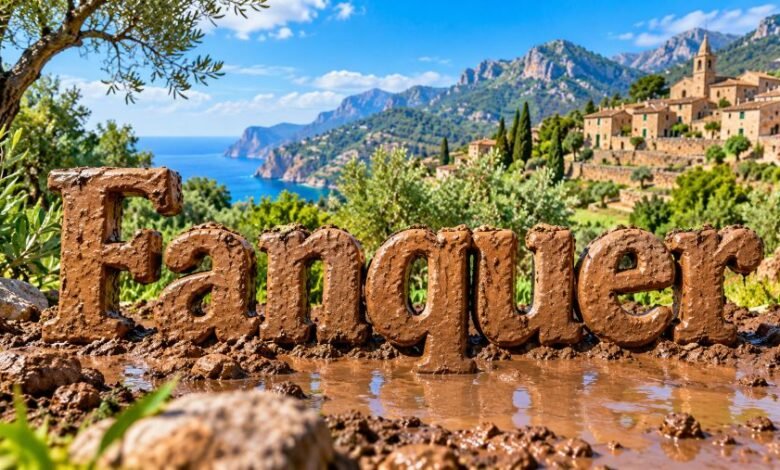
Fanquer: Meaning, Origin, Online Uses and What You Should Know
Understanding the real meaning of Fanquer, its Catalan roots, modern internet interpretations, and possible uses in digital branding.

Introduction
Some words are familiar the moment you read them. Others make you stop and wonder what they mean. Fanquer belongs to the second group.
Search for this unusual term, and you may find several different explanations. Some websites connect it with digital communities, while others describe it as an invented brand name or internet expression.
But there is an older story behind it.
Fanquer is recorded in a historical Catalan dictionary with meanings connected to mud and agricultural work. Its modern online interpretations tell a different story.
So what does the word actually mean, and why do websites explain it differently?
Quick Facts About Fanquer
| Detail | Information |
|---|---|
| Keyword | Fanquer |
| Word type | Masculine noun in historical Catalan usage |
| Documented language | Catalan |
| Regional association | Mallorca, Spain |
| Original root | Fang, meaning mud |
| Traditional meaning | A large amount of mud |
| Additional meaning | A worker who handled mud during grafting |
| Modern internet usage | Various suggested digital meanings |
| Official English slang definition | Not established |
| Verified universal digital platform | Not identified |
| Primary dictionary source | Diccionari català-valencià-balear |
What Is Fanquer?
Fanquer is an unusual word with a documented regional meaning and several newer online interpretations.
In Mallorcan Catalan, it traditionally refers to a large quantity of mud. The word also describes a person who followed a grafting worker and applied mud during the agricultural process.
These meanings come from the Diccionari català-valencià-balear, a major historical reference for Catalan vocabulary.
However, internet articles sometimes describe the term differently.
In digital discussions, writers have proposed using it to describe active fan participation, community involvement, or creative online identities.
These newer explanations should be treated as interpretations rather than established definitions.
Where Did the Word Come From?
The recorded linguistic origin comes from the Catalan word fang, meaning mud.
This connection makes sense when considering the traditional meaning.
Imagine a rural path after heavy rainfall. The ground becomes wet, soft, and difficult to cross. A regional word describing a large amount of mud would be useful in that setting.
The agricultural meaning also reflects a time when farming jobs involved specific responsibilities.
One person might perform plant grafting while another prepared or placed mud around the grafts.
The historical dictionary preserves this specialized use.
It shows how one word can carry information about language, local geography, and working life.
How Is Fanquer Used on the Internet?
Online explanations are less consistent.
Some websites present the term as a modern expression for people who actively support creators, communities, or brands.
Under this interpretation, the idea goes beyond simply following someone online.
An active community member might:
- Share creative content and ideas.
- Participate in discussions and polls.
- Support independent creators.
- Help organize community projects.
- Recommend products or entertainment.
- Offer suggestions that influence future content.
These are genuine activities within online communities.
However, calling them Fanquer is not a universally recognized practice.
The distinction matters. An article can suggest a new meaning without proving that people widely use the expression that way.
Is Fanquer a Website or Digital Platform?
Some online descriptions make Fanquer sound like a technology service, creative platform, or community management application.
That does not establish the existence of a functioning product.
The domain Fanquer.com has appeared in search results, but its presence alone does not confirm an operating fan-engagement service.
No clearly verified official application was identified during research for this article.
Readers should therefore avoid assuming that every website describing Fanquer is referring to the same company or product.
Before creating an account with an unfamiliar service, check its operator, contact information, privacy policy, and independent reputation.
Why Does Fanquer Have Different Meanings Online?
The internet allows unfamiliar words to develop new associations quickly.
A short, unusual keyword may attract attention because people cannot immediately identify it.
One writer might describe it as slang. Another could imagine a branding concept. A third may connect its spelling with existing English words.
After several articles repeat similar ideas, readers may assume the explanations reflect accepted usage.
That is not always true.
The most reliable way to understand an unfamiliar word is to examine its earliest documented use and compare that evidence with contemporary examples.
For this term, the historical Catalan meaning is clearly documented.
The suggested digital meanings remain much less settled.
Fanquer and Modern Digital Branding
Even though its original meaning relates to mud, the word has characteristics that might interest people developing a new brand.
It is short, distinctive, and relatively easy to recognize visually.
A business could theoretically adopt a name like this for a creative project, website, or product.
However, choosing an unusual name requires more than checking whether it sounds appealing.
A business owner should research existing trademarks, domain ownership, similar names, and meanings in other languages.
The historical meaning may also influence how the name is received.
For example, a gardening or outdoor business might find the association with soil and mud relevant. A completely unrelated company may prefer a different identity.
Unusual spelling alone does not guarantee a name is legally available or commercially suitable.
Is Fanquer Related to Fan Communities?
Some recent articles associate the word with passionate fans and collaborative online communities.
One suggested explanation combines the English words fan and conquer.
In that interpretation, supporters become active contributors rather than passive viewers.
For example, a musician might invite listeners to choose artwork for an upcoming release. A gaming community could suggest improvements, while a creator might ask followers to vote on future content.
These are examples of audience participation.
Yet there is no strong evidence that the proposed English word combination represents the historical origin of Fanquer.
Its documented Catalan etymology is different.
Readers should separate the established linguistic history from imaginative modern interpretations.
How to Understand Unfamiliar Internet Keywords
New and unusual terms frequently appear in searches, social media posts, and website titles.
Not every term represents a new company, trending application, or popular internet movement.
When researching an unfamiliar expression, begin with its context.
Look at where the word appeared. Check whether it refers to a person, location, website, product, or ordinary vocabulary.
Next, compare reputable dictionaries and primary sources with the explanations presented by blogs.
If several websites provide conflicting answers, those differences may indicate that the term has no agreed modern meaning.
This approach helps readers avoid misleading claims while still appreciating how language develops.
Final Thought
Fanquer is more than an unfamiliar collection of letters.
Its documented history connects it with Mallorca, the Catalan language, and traditional rural life. At the same time, modern internet articles have introduced other ideas involving communities, creative identities, and branding.
The important point is to distinguish fact from interpretation.
The historical meaning is recorded. The proposed digital meanings remain uncertain.
For anyone researching this keyword, that distinction provides a clearer and more useful answer than treating every online explanation as established fact.
Frequently Asked Questions
1. What does Fanquer mean?
Fanquer is a documented Mallorcan Catalan word referring to a large quantity of mud. It also has a traditional agricultural meaning associated with a worker who handled mud during grafting.
2. Is Fanquer a real word?
Yes. The word appears in the Diccionari català-valencià-balear, although it is not an everyday English word.
3. Is Fanquer an English slang expression?
There is no widely established English slang definition. Some websites connect the term with online fan participation, but this interpretation is not universally accepted.
4. Where did Fanquer originate?
Its documented linguistic root is the Catalan word fang, meaning mud. The dictionary associates the term with Mallorca.
5. Is Fanquer a company or application?
The word may appear in website names and commercial contexts. However, research has not established a single official digital application or company defining all uses of the term.
6. Why do people search for Fanquer?
People may encounter it in online articles, website names, or unfamiliar text and search to understand its meaning. Public search-volume data would be needed to establish how popular the keyword is.
7. Can Fanquer be used as a business name?
Potentially, but anyone considering it should first check relevant trademark databases, existing businesses, and domain ownership.
8. Does Fanquer have a connection with social media?
Some online writers have suggested a connection with digital communities and active fandom. This remains a proposed modern interpretation rather than an established historical definition.