

Gary Marcus: and His Case for More Reliable AI
The cognitive scientist, author, and tech founder has spent decades asking one basic question: what does a machine need before we can truly trust its intelligence?

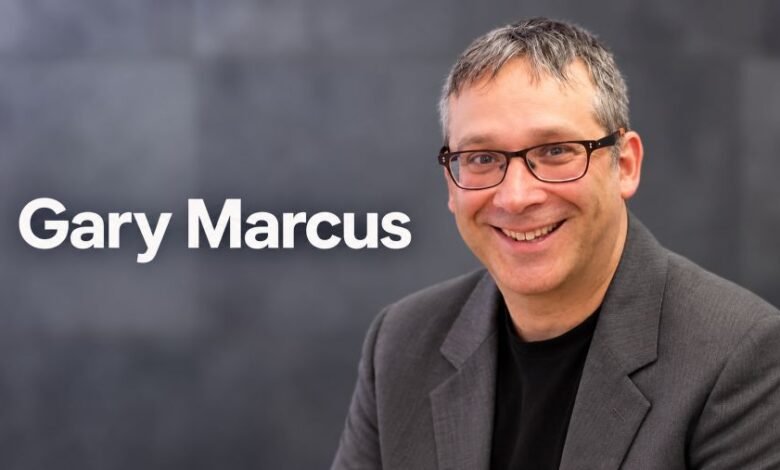
Introduction
Gary Marcus is an American cognitive scientist, author, professor emeritus, and technology entrepreneur. He is widely known for his research on human cognition and for questioning some big claims made about artificial intelligence.
His work goes back decades.
That matters.
Marcus was studying language, learning, and reasoning long before ChatGPT made generative AI an everyday topic. Today, he is one of the better-known public critics of the idea that simply making language models larger will automatically lead to dependable human-like intelligence.
As of September 2026, Marcus is Professor Emeritus at New York University and is publicly listed as founder and CEO of the Center for the Advancement of Trustworthy AI.
He also writes Marcus on AI, where he discusses AI systems, industry claims, safety, reasoning, and public policy.
Quick Facts About Gary Marcus
| Fact | Detail |
|---|---|
| Full name | Gary Fred Marcus |
| Professional name | Gary Marcus |
| Born | 1970 |
| Nationality | American |
| Profession | Cognitive scientist, author, entrepreneur |
| Academic status | Professor Emeritus at New York University |
| Current organisation | Center for the Advancement of Trustworthy AI |
| Current role | Founder and CEO |
| Education | PhD from MIT |
| PhD field | Brain and Cognitive Sciences |
| Doctoral adviser | Steven Pinker |
| Known for | Cognitive science, AI criticism, language research |
| Former company | Geometric Intelligence |
| Another company founded | Robust.AI |
| Former Uber role | Head of Uber AI Labs |
| Latest major book | Taming Silicon Valley |
| Current publication | Marcus on AI |
Who Is Gary Marcus?
Gary Marcus works across psychology, cognitive science, artificial intelligence, and technology.
That mix is important.
He did not enter the AI discussion from journalism or online commentary. His background started with academic research into how people learn, how children pick up language, and how the human mind handles rules.
Then came business.
Marcus founded AI companies, worked with Uber, wrote books, and later became more active in discussions about AI oversight.
Basically, he has seen the subject from several sides.
His main public argument is simple.
Current AI can do impressive things. But impressive output does not always mean real understanding, reliable reasoning, or factual accuracy.
Marcus has repeatedly argued that AI researchers may need systems that handle knowledge, rules, abstraction, and reasoning more directly.
Early Interest in Computers
Marcus became interested in computers very young.
He has said he started programming at around eight years old.
That came early.
As a teenager, he built a Latin-to-English translation program using Logo on a Commodore 64.
He later told IEEE Spectrum that his work with computers helped him move through school faster. He entered college at 16.
His interest was already clear.
Computers were one part.
The human mind was another.
Marcus wanted to figure out how people think, learn, recognise patterns, and use language. That pushed him towards cognitive science.
Education
Marcus studied cognitive science at Hampshire College.
He later attended the Massachusetts Institute of Technology.
At MIT, he studied in the Department of Brain and Cognitive Sciences. He completed his PhD in 1993.
Steven Pinker supervised his doctoral work.
His thesis was titled On Rules and Exceptions: An Investigation of Inflectional Morphology.
The subject sounds technical.
The basic question was easier.
How do people learn language rules?
And what happens with words that break those rules?
Those questions later became closely tied to Marcus’s arguments about machine learning.
Early Research on Language and Learning
Marcus spent much of his early academic career studying human cognition.
One major topic was language.
He looked at how children learn patterns and how people handle abstract rules.
In 1999, Marcus and fellow researchers published a study in Science called Rule Learning by Seven-Month-Old Infants.
The researchers tested whether babies could pick up abstract patterns from sequences of sounds.
The study found evidence that infants could apply learned patterns to new sounds they had not heard during training.
That result became part of a much bigger debate.
Can learning be explained mainly through statistical pattern matching?
Or does the mind also use abstract rules?
Marcus argued that rules matter.
That idea stayed with him.
Years later, similar questions appeared again in debates about neural networks and large language models.
Gary Marcus at New York University
Marcus built a long academic career at New York University.
His research covered psychology, language, neural science, learning, and cognitive systems.
He later became Professor Emeritus.
His academic work often asked how mental systems handle structure.
That included language.
It also included reasoning.
Marcus became especially interested in the gap between recognising patterns and understanding how ideas fit together.
This became a major theme in his AI work.
The Algebraic Mind
In 2001, Marcus published The Algebraic Mind through MIT Press.
The book examined a long-running argument in cognitive science.
Do people think mainly through learned neural patterns?
Or do mental systems also use rule-like representations?
Marcus argued that the two ideas do not need to cancel each other out.
Neural systems may still support structured rules.
That point later became important in discussions around hybrid AI systems.
Marcus has long argued that machine intelligence may need more than statistical pattern matching.
Other Books
Marcus has written books for both academic and general readers.
The Birth of the Mind looked at genes, development, and human thinking.
Kluge examined the odd compromises found in the human mind.
Then came something different.
Guitar Zero followed Marcus as he tried to learn guitar as an adult.
The project gave him another way to talk about learning, practice, memory, and the brain.
It was personal.
But it still connected to science.
In 2019, Marcus and computer scientist Ernest Davis published Rebooting AI.
The book questioned whether existing AI methods were enough to produce systems people could safely rely on.
Marcus and Davis argued that common sense, reasoning, and deeper understanding deserved more attention.
Geometric Intelligence
Marcus moved from academic research into the AI business world.
He co-founded Geometric Intelligence.
The company worked on machine-learning methods that aimed to learn effectively without needing the huge amounts of training data often associated with deep learning.
Uber acquired Geometric Intelligence in December 2016.
The deal led to the creation of Uber AI Labs.
Marcus became head of the new research group.
This gave him direct experience inside a major technology company working on AI.
His time there was short.
Marcus left the active leadership role in March 2017.
Reports at the time said he remained connected as an adviser.
The financial terms of Uber’s acquisition were not publicly disclosed.
So claims about Marcus personally making a specific amount from the deal should be avoided.
Starting Robust.AI
Marcus later helped start Robust.AI with several well-known researchers in robotics and artificial intelligence.
The company focused on making robots easier to use in real working environments.
The founding group included robotics researcher Rodney Brooks.
By October 2020, reporting said the company had raised $22.5 million in funding.
That was company funding.
It was not Marcus’s personal income.
Current company leadership materials no longer list Marcus as its CEO.
So describing him as the current head of Robust.AI would be outdated.
Why Gary Marcus Criticises Current AI
This is the part many readers search for.
Marcus does not argue that AI is useless.
His criticism is more specific.
He believes current language models can produce fluent and useful answers while still making basic factual or reasoning mistakes.
They can sound certain.
Yet they can be wrong.
That gap bothers him.
Marcus has repeatedly questioned whether scaling current systems with more data and computing power will solve deeper problems around reasoning, abstraction, factual reliability, and common sense.
He has argued for AI systems that combine different methods.
Some may use neural networks.
Others may handle rules, reasoning, or structured knowledge more directly.
His ideas remain debated.
Many AI researchers believe continued scaling, better training methods, tool use, and new system designs can solve more of these problems.
Marcus remains sceptical that scaling alone is enough.
That disagreement is real.
And it is still open.
Gary Marcus and ChatGPT
The release of ChatGPT pushed Marcus into a much larger public discussion.
He became a frequent commentator on large language models.
His main concern was reliability.
Language models could write smoothly.
They could answer questions quickly.
But they could also invent facts.
Marcus argued that fluent writing should not automatically be treated as proof of understanding.
Actually, this became one of his biggest public talking points.
He has also said generative AI can be useful in limited or well-controlled situations.
So his position is not simply “AI is bad.”
He wants systems people can trust more.
US Senate Testimony
Marcus appeared before the United States Senate Judiciary Subcommittee on Privacy, Technology, and the Law on 16 May 2023.
The hearing focused on rules for artificial intelligence.
OpenAI CEO Sam Altman and IBM executive Christina Montgomery also appeared.
Marcus spoke as a New York University professor emeritus and AI researcher.
His testimony pushed him further into public policy discussions.
He argued for stronger oversight of powerful AI systems.
His policy ideas remain his own positions.
They should not be treated as settled agreement across the AI field.
Center for the Advancement of Trustworthy AI
Marcus later became founder and CEO of the Center for the Advancement of Trustworthy AI.
The organisation reflects the direction his work has taken in recent years.
Research still matters.
But governance matters too.
Marcus now spends a lot of time discussing how companies build AI, how systems are tested, what risks users face, and what rules may be needed.
As of September 2026, this is one of his main publicly documented roles.
Taming Silicon Valley
MIT Press published Taming Silicon Valley: How We Can Ensure That AI Works for Us in September 2024.
The book moved heavily into public policy.
Marcus discusses the limits of current AI systems and questions how major technology companies handle powerful AI products.
He also sets out his own ideas for oversight.
Again, those proposals are positions.
Readers should separate them from established technical facts.
Marcus on AI
Marcus also publishes Marcus on AI.
The newsletter has become one of his main public platforms.
He writes about new AI models, autonomous agents, company announcements, AI policy, and research claims.
His writing is often critical.
Sometimes sharply so.
But there is a consistent question behind it.
Can these systems actually do what companies say they can do?
Marcus tends to focus on testing that claim.
Public Debate With Other AI Researchers
Marcus has disagreed publicly with several major figures in artificial intelligence.
Those debates often centre on one issue.
How far can neural networks go?
Researchers do not all agree.
Some believe larger and better-trained neural systems may eventually reach much stronger forms of reasoning.
Marcus thinks that view gives current methods too much credit.
He has argued for more structured approaches.
That debate has followed him for years.
It did not begin with ChatGPT.
His earlier work in cognitive science was already asking related questions.
Personal Life
Public reporting has confirmed that Marcus is married.
Reliable family records have also identified his wife as Athena and confirmed that he has children.
Marcus has spoken publicly about watching his children’s language development while thinking about cognition.
He has described his wife as a developmental psychologist in a published interview.
Details beyond what Marcus or reliable public sources have disclosed should stay outside a public profile.
Gary Marcus Net Worth
There is no solid public record that establishes Gary Marcus’s personal net worth.
So a specific number would be guesswork.
What can be confirmed is different.
He founded Geometric Intelligence.
Uber acquired that company in 2016.
The purchase price was not publicly disclosed.
Marcus also helped start Robust.AI.
Public reporting has covered funding raised by that company.
Company funding is not personal wealth.
For that reason, it would be misleading to turn those business figures into a personal net-worth estimate.
What Is Gary Marcus Doing Now?
As of September 2026, Marcus remains active in AI research discussion, writing, and public policy.
He is Professor Emeritus at NYU.
He leads the Center for the Advancement of Trustworthy AI.
He also continues publishing Marcus on AI.
His current public work mostly centres on one subject: how to build AI systems that are more dependable, easier to check, and less likely to produce serious errors.
The technology keeps changing.
His basic question has not.
Can we trust the system?
Major Career Turning Points
Marcus’s career can be broken into several clear stages.
First came cognitive science.
Then academic research.
Later came books and public writing.
After that, he moved into AI startups.
Geometric Intelligence took him into commercial AI.
The Uber acquisition put him inside a major technology company.
Then his attention shifted again.
He became much more active in AI policy, public debate, and system reliability.
The 2023 Senate hearing marked another clear change.
From that point, Marcus became increasingly visible in discussions about rules and accountability around AI.
Why Gary Marcus Matters in the AI Debate
Marcus brings an unusual background to the AI conversation.
He studied human cognition.
He researched language development.
He built AI companies.
He led an AI lab.
And now he writes about AI governance.
That does not make every prediction correct.
No researcher gets that guarantee.
But it explains why his criticism receives attention.
His core argument is easy to understand.
A machine can produce a good answer without actually having a dependable model of the world behind that answer.
For Marcus, that difference matters.
A lot.
Especially once AI systems start making decisions with real consequences.
Verified Interesting Facts About Gary Marcus
- Marcus started programming as a child.
- He built a Latin translation program as a teenager.
- He entered college at 16.
- Steven Pinker supervised his MIT doctorate.
- His PhD was completed in 1993.
- His 1999 infant-learning paper appeared in Science.
- He founded Geometric Intelligence.
- Uber bought that company in 2016.
- He later headed Uber AI Labs.
- He helped start Robust.AI.
- He testified before the US Senate in 2023.
- He wrote Taming Silicon Valley in 2024.
Final Thought
Gary Marcus has spent much of his career asking how intelligence really works.
First, he studied people.
Then he studied machines.
Now he questions whether current AI systems are being trusted too quickly.
His view is debated.
That is normal in science.
But his argument stays clear: fluent answers, large models, and impressive demonstrations should be tested against something tougher.
Can the system reason?
Can it handle new situations?
Can people depend on its answers?
For Marcus, those are the questions that count.
Frequently Asked Questions
Who is Gary Marcus?
Gary Marcus is an American cognitive scientist, author, technology entrepreneur, and Professor Emeritus at New York University.
What is Gary Marcus known for?
He is known for cognitive-science research and for publicly questioning the reasoning and reliability of current AI systems.
Where did Gary Marcus study?
He studied cognitive science at Hampshire College and later completed a PhD at MIT.
Who was Gary Marcus’s PhD adviser?
Steven Pinker supervised his doctoral research at MIT.
Did Gary Marcus work for Uber?
Yes. He became head of Uber AI Labs after Uber acquired his company Geometric Intelligence in 2016.
Did Gary Marcus found an AI company?
Yes. He founded Geometric Intelligence and later helped start Robust.AI.
What does Gary Marcus think about AI?
He accepts that current AI can be useful, but argues that present systems still have serious problems with reliability, reasoning, and factual accuracy.
What is Gary Marcus doing now?
As of September 2026, he is Professor Emeritus at NYU, leads the Center for the Advancement of Trustworthy AI, and writes Marcus on AI.