
Simon Tisdall: The Journalist Who Spent Decades Reporting World Affairs
From Cambridge to Washington and decades at The Guardian, Simon Tisdall has built a long career writing about foreign policy, wars, diplomacy and global politics.

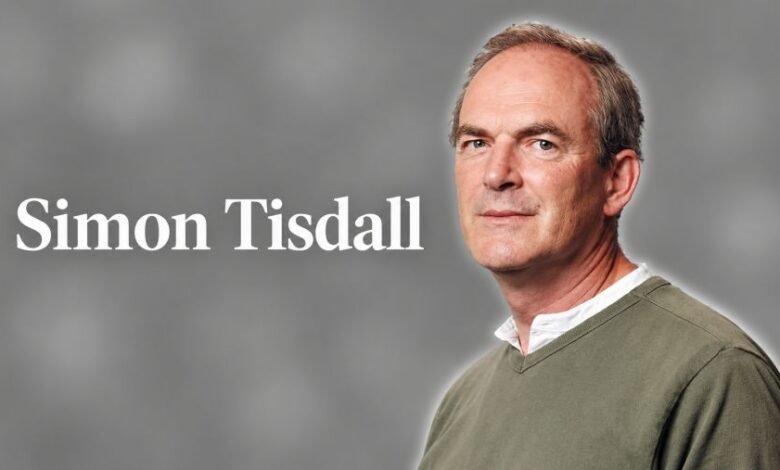
Introduction
Simon Tisdall is a British journalist and foreign affairs commentator best known for his long association with The Guardian and The Observer. His career stretches back several decades.
He has done many jobs. Reporter. Editor. Columnist. White House correspondent.
As of September 2026, The Guardian identifies him as a Guardian foreign affairs commentator. His recent writing still focuses heavily on international politics, conflicts, US foreign policy, Europe, Russia, China and the Middle East.
Quick Facts
| Fact | Details |
|---|---|
| Full name | Simon Tisdall |
| Profession | Journalist and foreign affairs commentator |
| Current role | Guardian foreign affairs commentator |
| Main publication | The Guardian |
| Former roles | US editor, White House correspondent, foreign editor, assistant editor, foreign leader writer |
| University | Downing College, Cambridge |
| Degree subject | History |
| Joined Guardian Foreign News Desk | 1978 |
| Washington posting | 1989–1994 |
| Observer foreign editor | 1996–1998 |
| Main writing area | International affairs and global politics |
| Notable journalism project | Guardian work on WikiLeaks US diplomatic cables in 2010 |
Who Is Simon Tisdall?
Simon Tisdall is an experienced British newspaper journalist.
Most readers know him through The Guardian. His work there has covered foreign affairs for decades, both as a reporter and as an editor.
He has written about presidents, wars, diplomatic disputes, security questions and major changes in world politics. He also spent years reporting directly from Washington.
That US experience matters.
From 1989 until 1994, he worked as The Guardian’s US editor and White House correspondent. It gave him direct exposure to American politics during a period that included the end of the Cold War and major changes in US foreign policy.
Today, his work is mainly commentary.
Education and Early Background
Tisdall spent part of his school years at Dame Allan’s Schools in Newcastle upon Tyne, starting there in 1964.
He later attended a grammar school in Derbyshire and then Holland Park School in London.
Journalism was already around him.
His father, John Tisdall, worked for the BBC. His mother, Mary Tisdall, also built a career in journalism and broadcasting.
That family background gave him an early look at news work. Still, he did not immediately leave university with a fixed plan to become a foreign correspondent.
He went to Downing College, Cambridge, entering in 1971.
He studied history.
While at Downing, he became JCR president during his third year. College records also connect him with student campaigning around the admission of women to the college.
His later career moved well beyond university politics.
How His Journalism Career Started
His first journalism job was with an international trade magazine.
That work quickly became international.
He was sent from London to Germany, and later assignments took him to several parts of the world. His early reporting experience included travel linked with Europe, South America, Iran, Africa, Asia and the United States.
Travel appealed to him.
So did journalism.
He later explained that seeing the world was one reason he was drawn to the profession.
That choice stuck.
Joining The Guardian
A major career step came in 1978.
That year, Tisdall joined the Guardian Foreign News Desk.
It became a long professional relationship.
Over time, he moved through several reporting and editorial jobs. Those positions gave him experience both producing foreign news and deciding how international stories should be covered.
His past Guardian roles include:
- foreign leader writer
- foreign editor
- US editor
- White House correspondent
- assistant editor
- foreign affairs commentator
The exact job changed.
The subject rarely did.
International politics remained the main thread.
Reporting From the United States
Tisdall began reporting on the United States for the Guardian and Observer from 1988.
A year later, he moved into one of his most notable assignments.
Between 1989 and 1994, he was based in Washington as The Guardian’s US editor and White House correspondent.
That was a major news period.
The Berlin Wall had fallen. The Soviet Union was breaking apart. The Gulf War took place. American foreign policy was being rewritten.
He watched those changes from Washington.
His later columns continued to return to American politics, presidents and US relations with Europe and the wider world.
Basically, the US became one of his long-running subjects.
Work as Foreign Editor
Tisdall later served as foreign editor of The Guardian.
He also held a senior role at The Observer.
From 1996 to 1998, he was Observer foreign editor, according to material published by Downing College.
That meant managing international coverage rather than simply writing individual reports.
It was a different job.
Editors have to judge stories, work with correspondents and decide which international events deserve the strongest attention.
His experience on both sides of that process later shaped his commentary on foreign reporting and the risks journalists face.
Conflict Reporting and Journalist Safety
Tisdall has spoken publicly about working in conflict areas.
He has also discussed what happens when journalists repeatedly work around violence, war and serious danger.
For him, the issue is practical.
News organisations send correspondents into difficult places. Those organisations also have responsibilities toward those reporters.
He has spoken about the duty editors have to support journalists working in dangerous conditions.
That view comes from direct professional experience rather than theory alone.
WikiLeaks Diplomatic Cables
One interesting part of his career came in 2010.
Tisdall worked with The Guardian team examining the large collection of US State Department diplomatic cables released through WikiLeaks.
It was a huge amount of material.
Journalists had to search, check and make sense of thousands of documents.
Tisdall worked particularly on material involving countries such as Iran and North Korea.
Downing College later reported that his work on the files contributed to several front-page stories.
The project became one of the biggest document-based journalism stories of that period.
It also showed another side of foreign reporting.
Sometimes the work happens in war zones.
Sometimes it happens in databases.
His Observer Commentary
Tisdall later became well known to Observer readers for his foreign affairs commentary.
He wrote regularly about global security, Britain, Europe, the United States and international conflicts.
That chapter ended in March 2025.
On 29 March 2025, he told readers that the article he was publishing would be his last foreign affairs commentary for The Observer.
He did not leave foreign affairs writing.
Instead, his work continued through The Guardian.
What Is Simon Tisdall Doing Now?
As of September 2026, his verified current description is Guardian foreign affairs commentator.
That wording matters.
Older pages sometimes identify him as an assistant editor or foreign editor. Those were earlier positions.
His present Guardian work is commentary.
Recent subjects have included:
- US foreign policy
- Russia and Ukraine
- Iran and the Middle East
- China
- European security
- NATO
- nuclear weapons
- international law
- war and diplomacy
He was still publishing Guardian commentary in September 2026.
So his career remains active.
Simon Tisdall’s Writing Focus
Foreign policy is his main area.
But that covers a lot.
He writes about how governments act abroad, why conflicts begin, how alliances change and what major political decisions might mean for ordinary people.
The United States appears often.
So does Europe.
Russia, China and the Middle East also make up a large part of his recent work.
His articles are commentary rather than straight news reports, so they usually contain analysis and his own argument alongside reported facts.
That distinction is useful.
He is not simply telling readers what happened. He is making a case about what those events could mean.
His Family Connection to Journalism
Journalism also runs through his family history.
His mother, Mary Tisdall, worked in newspapers, television and radio. Her career included work connected with the BBC, Tyne Tees Television and the Northern Echo.
Simon later wrote her obituary for The Guardian after her death in 2017.
His father, John, also worked for the BBC.
This gives some context to his own career.
News was familiar early.
But his own path became heavily international.
Public sources also identify a sister, Sarah, and a brother, Nicholas, who died in 1988.
Claims about a spouse, partner or children should not be added without stronger public sourcing.
A 2007 Guardian Coverage Debate
One piece of Tisdall’s reporting drew public criticism in 2007.
A Guardian front-page article discussed claims from US officials about alleged Iranian links with armed groups in Iraq.
Some readers argued that the report gave too much weight to the US claims.
The newspaper addressed those complaints publicly.
Editors discussed whether parts of the story should have been presented with stronger qualification. The newspaper also explained that the reporting came from several sources rather than one source.
This is best described as an editorial debate about sourcing and presentation.
There is no reason to turn it into something bigger.
Interesting Facts About Simon Tisdall
He did not immediately plan a journalism career.
He later said the decision came a few years after leaving Cambridge.
His first journalism role involved international travel.
Germany was an early assignment.
He was JCR president at Cambridge.
That happened during his time at Downing College.
He spent five years reporting from Washington.
His White House posting ran from 1989 to 1994.
He worked on the WikiLeaks cable project.
His focus included Iran and North Korea material.
He has worked as both reporter and editor.
That gives him experience from both sides of foreign news production.
Final Thought
Simon Tisdall’s career is mainly a story about foreign journalism.
He joined the Guardian Foreign News Desk in 1978, later reported from Washington, became a foreign editor, worked at senior editorial level and spent years writing international commentary for both The Guardian and The Observer.
The titles changed.
Foreign affairs stayed.
As of September 2026, he continues that work as a Guardian foreign affairs commentator, writing about some of the biggest political and security questions facing the world.
Frequently Asked Questions
Who is Simon Tisdall?
Simon Tisdall is a British journalist and foreign affairs commentator known for his long career with The Guardian and The Observer.
What does Simon Tisdall do now?
As of September 2026, The Guardian identifies him as a Guardian foreign affairs commentator.
Did Simon Tisdall work at the White House?
He worked as The Guardian’s White House correspondent in Washington from 1989 to 1994.
Where did Simon Tisdall study?
He studied history at Downing College, University of Cambridge.
When did Simon Tisdall join The Guardian?
He joined the Guardian Foreign News Desk in 1978.
Was Simon Tisdall an editor?
Yes. His past jobs include foreign editor of The Guardian, foreign editor of The Observer and assistant editor at The Guardian.
Did Simon Tisdall work on the WikiLeaks files?
Yes. He was part of The Guardian’s work on the US diplomatic cables released through WikiLeaks in 2010.
Is Simon Tisdall still writing for The Observer?
His final foreign affairs commentary for The Observer was published on 29 March 2025. He continued writing for The Guardian after that point.