
Tanya Byron: Clinical Psychologist, Broadcaster and Author
From BBC parenting programmes to the Byron Review and clinical psychology, Tanya Byron has built a career across mental health, television, writing and public policy.

Introduction
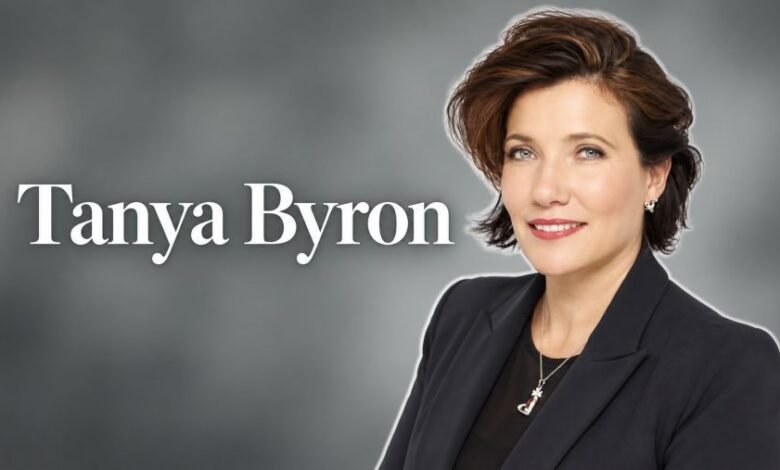
Tanya Byron is a British consultant clinical psychologist, author, broadcaster and journalist. Many people first knew her from BBC programmes such as Little Angels and The House of Tiny Tearaways.
Her work goes much further than TV.
She has spent more than three decades in clinical psychology. She led a major UK government review into children’s online safety, writes a weekly advice column for The Times, and continues clinical work.
As of September 2026, Byron is still practising as a clinical psychologist. She is also linked with University College London’s clinical psychology training programme and has published a new book, You Are Not a Diagnosis.
Quick Facts About Tanya Byron
| Fact | Detail |
|---|---|
| Full professional name | Professor Tanya Byron |
| Profession | Consultant clinical psychologist |
| Other work | Author, broadcaster, journalist and speaker |
| Qualifications | BSc, MSc, PsychD, FRSA |
| University education | University of York and University College London |
| Current clinical work | Continues practising as a psychologist |
| UCL role | Honorary staff connected with clinical psychology training |
| Known TV programmes | Little Angels, Teen Angels, The House of Tiny Tearaways |
| Major public-policy work | The Byron Review on children’s digital safety |
| Former university role | First Chancellor of Edge Hill University |
| Chancellor term | 2008–2018 |
| Newspaper work | Weekly advice column for The Times |
| Latest book | You Are Not a Diagnosis |
| Latest book publication | 3 September 2026 |
Who Is Tanya Byron?
Tanya Byron is best known for bringing clinical psychology into mainstream British television while continuing professional work away from the cameras.
That distinction matters.
She did not start as a television personality who later moved into psychology. Her clinical career came first.
She trained as a psychologist, worked in NHS settings, treated people across different age groups and later became known to millions through television.
Her public work has covered parenting, mental health, relationships, digital safety and emotional wellbeing.
She has also advised government.
That part of her career became especially important in 2008.
Tanya Byron’s Education and Psychology Training
Byron studied psychology at the University of York.
She later completed clinical psychology training at University College London.
Her doctoral research focused on treatment connected with cocaine, amphetamine and ecstasy misuse. The work involved University College Hospital and the University of Surrey.
Her early clinical career covered several areas.
These included drug dependency, HIV and sexual-health services, adult mental health, eating disorders, and work with children and young people.
So, basically, her professional background was already broad before television arrived.
She later moved into senior and consultant-level clinical work.
Tanya Byron’s Clinical Career
Clinical psychology has remained the main base of Byron’s professional life.
Her experience now covers more than 30 years.
She has worked with children, teenagers, adults and families. Her current professional material says her present clinical work has a particular focus on young adults, adults and older adults.
As of September 2026, her own professional website states that she spends three days each week in clinical practice.
She is registered professionally as a practitioner psychologist.
Byron has also taught and worked with psychology trainees.
University College London currently lists her among the honorary staff connected with its Doctorate in Clinical Psychology programme.
Her own site describes her as an Honorary Lecturer at UCL.
How Tanya Byron Became Known on Television
Television changed how widely the public knew her name.
In the early 2000s, Byron appeared as the psychologist on the BBC programme Little Angels.
The show ran from 2003 to 2005.
It focused on families dealing with behavioural and parenting problems. Byron used psychological ideas while working with parents and children.
She then appeared in Teen Angels.
Another major programme followed.
From 2005 to 2006, she appeared on The House of Tiny Tearaways.
That series dealt with parents facing difficult behavioural issues with young children.
The programmes made Byron one of Britain’s more recognisable television psychologists.
But she later stepped away from that style of parenting TV.
In a 2007 interview with The Guardian, she spoke about concerns over where the format was heading and the professional issues involved.
That decision showed a clear line between entertainment and clinical responsibility.
Tanya Byron and the Byron Review
One of Byron’s biggest public roles had nothing to do with parenting television.
In 2007, the UK government asked her to examine children’s use of the internet and video games.
Prime Minister Gordon Brown commissioned the work.
The resulting report was called Safer Children in a Digital World.
It became widely known as the Byron Review.
The report was published in March 2008.
Its main question was simple: how could children benefit from online technology while facing fewer risks?
Byron looked at internet use, video games, age ratings, parental awareness and responsibility across industry and government.
The UK government accepted the review’s recommendations.
The work helped push discussion around stronger video-game age classifications and child internet safety.
It also argued that children needed skills to deal with online risk instead of being treated only as passive users who had to be shielded from everything.
In 2010, Byron produced a follow-up report titled Do We Have Safer Children in a Digital World?
Years later, the NSPCC was still reviewing how many of the original recommendations had been put into practice.
So the Byron Review was not a short-lived media project.
It became part of a wider UK policy debate.
Tanya Byron’s Writing Career
Byron has written about psychology for many years.
Since 2005, she has written a weekly advice column for The Times.
The column remains active in 2026.
Her published books include work on parenting, child development and mental health.
Earlier titles include:
- Your Child, Your Way
- Your Toddler Month by Month
Her latest book takes a different direction.
You Are Not a Diagnosis
On 3 September 2026, Penguin published Tanya Byron’s new book, You Are Not a Diagnosis: The Therapy-Speak Trap and the Lost Art of Listening to Ourselves.
The book looks at the way clinical language is now used in everyday life.
Byron discusses the difference between normal emotional distress and diagnosed mental-health disorders.
She also examines self-diagnosis.
Social media is part of that discussion.
The book asks whether people sometimes use clinical labels too quickly for normal feelings, difficult relationships or periods of stress.
It fits closely with Byron’s current public work around mental health.
Other Television and Radio Work
Byron’s television work did not stop with parenting programmes.
Her credits include:
- Am I Normal?
- Bedtime Live
- The Truth About Child Sex Abuse
- Lose Weight for Love
- Child of Our Time
- The Truth About Improving Your Mental Health
She has also appeared on Newsnight.
There is another side to her media work too.
In 2007, Byron co-wrote the BBC comedy series The Life and Times of Vivienne Vyle with Jennifer Saunders.
That is a pretty different credit for a clinical psychologist.
Her radio work has included Face to Face, produced with National Prison Radio.
The programme brought victims of serious crime into conversations connected with prisoners serving sentences for similar offences.
Face to Face won a Sony Radio Academy Gold Award in 2012.
A revised version later appeared on BBC Radio 4 as The Victim’s Voice.
Byron has also recorded three series of the podcast How Did We Get Here? with Claudia Winkleman.
Edge Hill University
Tanya Byron became the first Chancellor of Edge Hill University in 2008.
She remained in the position for ten years.
Her term ended in 2018.
This detail can sometimes be reported incorrectly on older profiles that still describe her as the university’s Chancellor.
She is a former Chancellor, not the current one.
The University of York awarded Byron an honorary Doctor of the University in 2009.
London Metropolitan University has also honoured her with an honorary doctorate.
Her professional profile lists academic links with UCL and Shandong Normal University in China.
Tanya Byron’s Charity Work
Byron has worked with several charities and social organisations.
She served as an NSPCC trustee from 2016 until October 2022.
That position has ended.
Current articles should not describe her as an active NSPCC trustee.
Grief Encounter lists Byron as an ambassador.
The charity works with children and young people affected by bereavement.
Her professional site has also listed support for organisations such as Place2Be, Relate, Prospex and The Prince’s Trust.
Tanya Byron’s Current Work in 2026
As of September 2026, Byron has several active areas of work.
She continues clinical practice.
She remains connected with UCL’s clinical psychology training programme.
She still writes her weekly advice column for The Times.
Her newest book, You Are Not a Diagnosis, was published in September 2026.
Public discussion around that book has placed her back in a familiar area: how people understand mental health, distress and psychological language.
Her current career is less about parenting television than it was two decades ago.
Clinical practice and mental-health writing now sit much closer to the centre.
Why Tanya Byron’s Work Still Matters
Byron’s career connects clinical psychology with public life.
Television made her widely known.
The Byron Review gave her work a policy impact.
Her newspaper writing keeps her involved in everyday questions around families, relationships and mental health.
And she still works clinically.
That last point is easy to miss.
She has remained a practising psychologist while also writing, broadcasting and teaching.
Final Thought
Tanya Byron is much more than the psychologist viewers may remember from early BBC parenting programmes.
Her career started in clinical psychology and has stayed rooted there.
She later moved into television, public policy, university work, radio and writing, while the 2008 Byron Review became one of the best-known parts of her public record.
As of September 2026, she remains professionally active. Her newest work is focused strongly on how people talk about mental health and diagnosis.
Frequently Asked Questions
Who is Tanya Byron?
Tanya Byron is a British consultant clinical psychologist, author, broadcaster and journalist.
What is Tanya Byron famous for?
She became widely known through BBC programmes such as Little Angels and The House of Tiny Tearaways and later for leading the Byron Review.
Is Tanya Byron still a psychologist?
Yes. As of September 2026, her professional site says she continues clinical practice three days a week.
What was the Byron Review?
The Byron Review was a UK government-commissioned examination of children’s safety when using the internet and video games.
Is Tanya Byron still Chancellor of Edge Hill University?
No. She was Edge Hill University’s first Chancellor from 2008 until 2018.
Does Tanya Byron write for The Times?
Yes. She continues to write a weekly advice column for The Times.
What is Tanya Byron’s latest book?
Her latest book is You Are Not a Diagnosis: The Therapy-Speak Trap and the Lost Art of Listening to Ourselves.
When was You Are Not a Diagnosis published?
Penguin published the book on 3 September 2026.