
Introduction
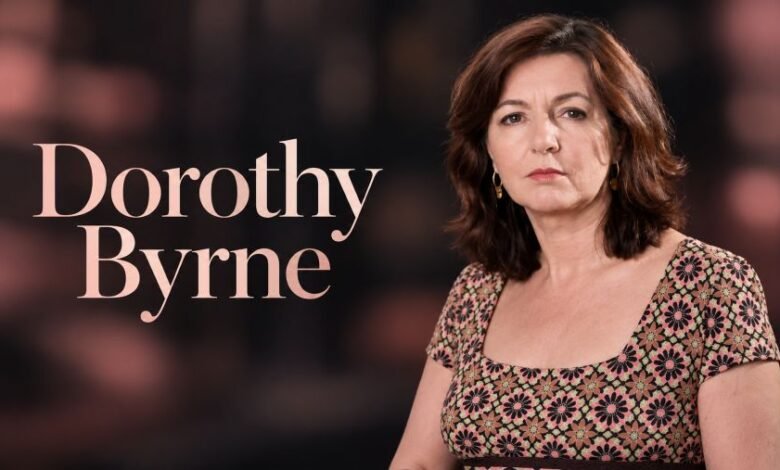
Dorothy Byrne is a British journalist, television producer, author and former media executive. She is best known for leading News and Current Affairs at Channel 4 and serving as President of Murray Edwards College at the University of Cambridge.
Her career spans decades. And it has rarely been quiet.
She worked on hard-hitting investigative programmes, supported independent reporting and questioned how politicians deal with journalists. Later, she took her experience into higher education.
She became President of Murray Edwards College in September 2021. Her presidency ended in 2025.
So, who is Dorothy Byrne? Here is her story, from her early years in Scotland to her work in British television and education.
Quick Facts About Dorothy Byrne
| Detail | Information |
|---|---|
| Full Name | Dorothy Byrne |
| Birthplace | Paisley, Scotland |
| Nationality | British |
| Profession | Journalist, television producer, author and former media executive |
| Education | University of Manchester |
| Further Education | University of Sheffield |
| University Degree | Philosophy |
| Additional Qualification | Diploma in Business Studies |
| Known For | Channel 4 News and Current Affairs |
| Former Position | Head of News and Current Affairs, Channel 4 |
| Academic Leadership | Former President, Murray Edwards College |
| College Presidency | 2021–2025 |
| Notable Book | Trust Me, I’m Not a Politician |
| Major Recognition | Royal Television Society Fellowship |
| Children | One daughter, publicly confirmed |
| Current Status | Former television executive and college president |
Early Life and Childhood
Dorothy Byrne was born in Paisley, Scotland. She later grew up in Blackpool, England.
Her early years helped build something important: confidence.
She attended school in Blackpool and developed an interest in public speaking and debate.
That interest stayed with her.
In 1970, she won the English-Speaking Union’s Schools’ Mace debating competition alongside fellow student Frankie Jordan.
It was an early achievement. But it also showed her willingness to question ideas and speak before an audience.
These skills later became part of her professional life.
Byrne would eventually spend years working with journalists who challenged powerful institutions and demanded clear answers.
Education and Academic Background
After school, Byrne attended the University of Manchester.
She studied philosophy.
This subject focuses on reasoning, questions and evidence. It gives students room to examine arguments and challenge assumptions.
Those habits fit naturally with journalism.
She later studied at the University of Sheffield, completing a Diploma in Business Studies.
Her education covered two different areas: academic reasoning and the practical workings of organisations.
Both became useful later.
She would eventually manage major television departments and lead an educational institution.
Starting a Career in Journalism
Byrne did not begin as a major television executive.
She started with local journalism.
Working on local newspapers helped her learn how reporting works. A journalist must find information, check details and explain a story clearly.
Then came television.
In 1982, Byrne joined Granada Television as a researcher. Her early work included Granada Reports.
She later worked on Union World, a programme produced for Channel 4.
Her career was moving forward.
She became involved with World in Action, an ITV investigative programme known for reporting on difficult public-interest stories.
At that time, women were less common in senior investigative television roles.
Byrne became one of the programme’s female producers.
It was demanding work. But it gave her experience in investigations, programme production and editorial decisions.
She also worked on ITV’s The Big Story.
These roles helped prepare her for Channel 4.
Building a Career at Channel 4
Byrne’s television career took a major turn in 1998.
She became Commissioning Editor of Current Affairs and editor of Dispatches at Channel 4.
The position carried real responsibility.
Commissioning editors decide which programme ideas deserve funding and production. They work with producers and check whether a proposed investigation has a strong public-interest case.
Byrne was involved in those decisions.
Then came another promotion.
In 2003, she became Head of News and Current Affairs at Channel 4.
This was one of the biggest positions in her television career.
She oversaw a department responsible for news reporting and current affairs programmes.
Her work was often connected with investigations into political decisions, international events, human rights and institutional wrongdoing.
The programmes attracted attention.
Some received major television awards. Others caused public debate.
Byrne remained in the leadership role for more than 15 years.
That is a long run in television.
Investigative Documentaries and Major Productions
One reason Byrne became widely known was her association with investigative documentaries.
She worked in a part of television where difficult questions are normal.
Stories sometimes take years to investigate. Producers must deal with evidence, legal concerns and people who may not want their actions examined.
During her leadership, Channel 4 commissioned documentaries dealing with war crimes, abuse allegations and international politics.
One notable example was Sri Lanka’s Killing Fields.
The documentary examined alleged violations of international humanitarian law during the final stages of Sri Lanka’s civil war.
Another major Channel 4 production was Leaving Neverland, released in 2019.
The documentary presented allegations of sexual abuse against Michael Jackson. The claims were disputed by his estate.
Byrne’s period at Channel 4 also included For Sama, a documentary about the experiences of a Syrian woman and her family during the war in Aleppo.
The film received a BAFTA and an Academy Award nomination.
These works attracted international attention.
Still, it is important to understand her role. Byrne was a senior editorial leader and commissioner. She did not personally direct every film produced under the department she led.
Why Her Leadership Attracted Attention
Byrne had strong views about public-interest journalism.
She believed reporters should ask serious questions, even when influential people find those questions uncomfortable.
Her approach included supporting investigations and defending the importance of independent news.
She also spoke about representation in broadcasting.
The issue mattered to her.
Her own early experience included working in television teams where senior women were relatively uncommon.
Over time, she used her position to argue for better opportunities for women and underrepresented journalists.
She also encouraged newsrooms to reflect the audiences they served.
The Famous 2019 MacTaggart Lecture
One of Byrne’s most discussed public appearances came in August 2019.
She delivered the MacTaggart Lecture at the Edinburgh Television Festival.
The annual lecture gives leading television figures a chance to discuss the industry’s biggest concerns.
Byrne used the occasion to speak about journalism, political accountability and public trust.
Her comments were direct.
She criticised the way some politicians dealt with the media. Boris Johnson and Donald Trump were among the political figures she discussed.
Her argument was that journalists should challenge misleading statements instead of treating every political claim as equally credible.
The lecture received extensive coverage.
It also strengthened her public reputation as an outspoken broadcasting executive.
For Byrne, journalism required more than simply repeating statements.
Reporters needed to investigate them.
Leaving Her Senior Channel 4 Position
In March 2020, Channel 4 announced an important career change.
Byrne would step down as Head of News and Current Affairs.
She was moving into a newly created role called Editor at Large.
Her new position began in May 2020.
The role involved staff mentoring, factual podcast planning and work connected with the broadcaster’s sustainability plans.
She was also expected to contribute to programme ideas.
However, she would no longer hold an active commissioning position.
It marked the end of a major chapter.
She had led one of Britain’s best-known television news and current affairs departments since 2003.
But her professional career was far from finished.
Work With Journalism and Educational Organisations
Byrne’s experience reached beyond television studios.
She became involved in journalism training, professional standards and academic discussions.
In 2020, she joined the Reuters Institute for the Study of Journalism at the University of Oxford as a Visiting Fellow.
Her interests included public-service broadcasting, media trust and relationships between journalists and politicians.
She also held a visiting professorship at De Montfort University, which has offered postgraduate education in investigative journalism.
These roles allowed her to share practical experience with students and media professionals.
She also worked with the Ethical Journalism Network.
Byrne chaired its Board of Trustees from March 2016 to March 2021.
The organisation supports ethical reporting and professional standards in journalism.
Her involvement reflected a long-standing interest in how journalists handle their responsibilities.
Becoming President of Murray Edwards College
Another big career change arrived in 2021.
Byrne became President of Murray Edwards College, part of the University of Cambridge.
Her appointment had been announced in December 2020.
She officially took up the position in September 2021, succeeding Dame Barbara Stocking.
Murray Edwards is a college with a strong commitment to women’s education.
The appointment brought Byrne into academic leadership.
This was different work.
Instead of managing news investigations, she was helping lead a college community of students, academics and staff.
Her background in leadership, public communication and women’s opportunities was relevant to the position.
She became the college’s sixth President.
Her presidency continued until 2025.
Supporting Women in Education and Work
Women’s opportunities remained an important subject throughout Byrne’s career.
She had experienced the challenges of working in a male-dominated television environment.
Later, she spoke about the need to create fairer opportunities in newsrooms.
Her move to Murray Edwards College connected with that interest.
The college has a long history of supporting women’s higher education.
During her presidency, Byrne worked within a community focused on academic study, student development and access to education.
Her television career and college role were different.
But both involved questions about who gets opportunities and who gets heard.
Books and Writing
Byrne also became an author.
In 2019, she published Trust Me, I’m Not a Politician.
The book discusses democracy, politics and public trust.
Its subject connects closely with her years in news and current affairs.
She had spent much of her career watching politicians speak to journalists and the public.
The book gave her another way to discuss those concerns.
She has also written newspaper commentary, including articles for The Guardian.
Her writing has covered journalism, television, politics and personal matters she chose to discuss publicly.
Personal Life and Family
Byrne has shared some details about her family.
However, much of her private life remains outside the public record.
One confirmed detail concerns her daughter.
In May 2022, Byrne wrote a personal article for The Guardian about becoming a mother through donor conception.
She explained that she had decided to have a child without a partner.
In the article, she also discussed the rights of donor-conceived children to learn about their biological origins.
Her account was personal.
It was also part of a wider public debate about donor anonymity and family information.
Byrne has not provided enough verified public information to establish her current marital status.
There is no reason to guess.
Her professional achievements can be understood without making claims about private relationships.
Awards and Professional Recognition
Byrne received several honours during her broadcasting career.
Her work also contributed to the success of award-winning television programmes.
Some major personal honours include:
- 2009: Fellow of the Royal Television Society, recognising her contribution to television.
- 2018: Outstanding Contribution Award at the Royal Television Society Journalism Awards.
- 2019: Grierson Trustees’ Award for her achievements in documentary television.
- 2019: Argonon Contribution to the Medium Award at the Women in Film and Television Awards.
- 2022: Honorary Doctor of the University recognition from the University of Portsmouth.
She also received a BAFTA Scotland honour for services to television.
These awards recognise a career spent working on news, documentaries and broadcasting leadership.
Her department’s productions won many awards too, though those programme awards should be distinguished from her personal honours.
What Is Dorothy Byrne Doing Now?
As of October 2026, Byrne is a former President of Murray Edwards College.
Her presidency ended in 2025.
Dr Rachel Polonsky began serving as Acting President in September 2025. The college confirmed in April 2026 that she would continue until the end of the 2026–2027 academic year.
Byrne is also a former Channel 4 Head of News and Current Affairs.
Her long association with investigative journalism remains a major part of her public profile.
A new permanent professional position for Byrne in 2026 has not been reliably confirmed.
For now, her documented career includes television leadership, writing, journalism education and college administration.
Career Timeline
| Year | Career Event |
|---|---|
| 1970 | Won a national school debating competition with Frankie Jordan |
| 1982 | Joined Granada Television |
| 1990s | Worked on World in Action and The Big Story |
| 1998 | Became a current affairs commissioning editor at Channel 4 |
| 2003 | Became Head of News and Current Affairs |
| 2009 | Received Royal Television Society Fellowship |
| 2016 | Began chairing the Ethical Journalism Network’s trustees |
| 2018 | Received the RTS Outstanding Contribution Award |
| 2019 | Delivered the MacTaggart Lecture and published her book |
| 2020 | Became Channel 4 Editor at Large and a Reuters Institute Visiting Fellow |
| 2021 | Became President of Murray Edwards College |
| 2022 | Received an honorary degree from the University of Portsmouth |
| 2025 | Ended her Murray Edwards College presidency |
Final Thought
Dorothy Byrne spent decades asking hard questions.
She began in local journalism. Then she moved into investigative television, led Channel 4’s news and current affairs output and eventually became president of a Cambridge college.
It was an unusual career path.
But her work followed a recognisable interest in evidence, public debate and opportunity.
Her influence is especially visible in British investigative broadcasting and her support for women working in journalism.
Her story also shows that a career does not have to stay in one field.
Sometimes, the next chapter looks completely different.
Frequently Asked Questions
Who is Dorothy Byrne?
Dorothy Byrne is a British journalist, author and former Channel 4 executive. She also served as President of Murray Edwards College, Cambridge.
Where was Dorothy Byrne born?
She was born in Paisley, Scotland, and later grew up in Blackpool, England.
What is Dorothy Byrne famous for?
She is best known for leading Channel 4’s news and current affairs department and supporting major investigative documentaries.
Where did Dorothy Byrne study?
She studied philosophy at the University of Manchester and completed a Diploma in Business Studies at the University of Sheffield.
When did Dorothy Byrne join Channel 4’s senior leadership?
She became a current affairs commissioning editor in 1998 and Head of News and Current Affairs in 2003.
Does Dorothy Byrne have children?
Yes. She has publicly confirmed that she has a daughter.
Was Dorothy Byrne President of Cambridge University?
No. She was President of Murray Edwards College, a constituent college of the University of Cambridge.
Is Dorothy Byrne still President of Murray Edwards College?
No. Her presidency ended in 2025. Dr Rachel Polonsky is serving as Acting President in 2026.