

Tracqueur: Meaning, Tracking Technology, Uses and What the Term Really Refers To
From GPS devices to digital monitoring, “Tracqueur” is appearing online in several contexts—but the spelling, technology and privacy questions behind it deserve a clearer explanation.

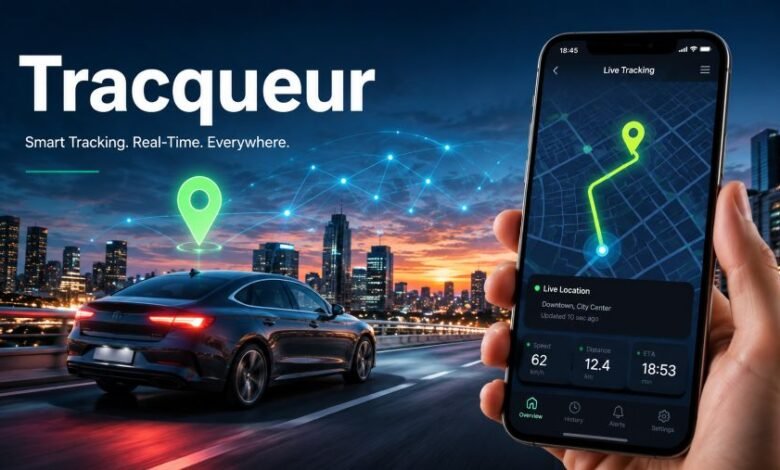
Introduction
Search for Tracqueur and the results can feel strangely mixed. One page talks about GPS trackers. Another discusses digital monitoring. There is also a website called Tracqueur.com.
So what is Tracqueur, exactly?
The safest answer is that Tracqueur is an online spelling and keyword associated with tracking, rather than the established name of one universally recognized technology or device. The standard French word is traqueur, derived from traquer, which means to pursue or track. French language references such as CNRTL and Larousse recognize traqueur, not “tracqueur,” as the conventional spelling.
In modern online use, however, searches for Tracqueur frequently lead toward GPS trackers, location-monitoring devices, vehicle trackers, asset tracking, Bluetooth trackers and digital tracking systems.
That makes the term worth understanding—but without pretending it has a technical definition that authoritative sources do not actually give it.
What Does Tracqueur Mean?
“Tracqueur” does not currently have the same established dictionary status as the French word traqueur.
CNRTL defines traqueur historically as a person who tracks or drives game during hunting. The word comes from traquer. Larousse likewise lists traqueur as a recognized French noun.
Larousse’s English-French dictionary also connects the English word tracker with traqueur when referring to a person involved in tracking, while a tracking device can be translated more literally as an appareil de poursuite.
The spelling Tracqueur, by contrast, now appears across websites discussing modern tracking technology.
That does not automatically make it wrong as a brand name, keyword or informal online term. Language on the web often moves faster than dictionaries. It simply means readers should not assume that every reference to Tracqueur describes the same device, company or service.
Context matters.
Someone searching for Tracqueur might actually be looking for:
- a GPS tracker;
- a vehicle tracking device;
- an asset tracker;
- a Bluetooth item tracker;
- a location-monitoring application;
- digital tracking technology;
- the French word traqueur;
- or the website Tracqueur.com.
Those are very different search intents.
Tracqueur vs Traqueur: What Is the Difference?
The spelling difference is the first thing readers should understand.
| Term | What it generally refers to |
|---|---|
| Traqueur | Established French word derived from traquer |
| Tracqueur | Online spelling, keyword or possible brand-style form |
| Tracker | Common English word for a person, device or software that tracks |
| GPS tracker | Device or system using satellite positioning information |
| Location tracker | Broader term for technology that monitors location |
Historically, traqueur was linked mainly with pursuing or tracking someone or something. CNRTL traces the word to the verb traquer and records usage going back centuries.
Modern tracking technology has given the broader concept a very different setting.
Today, tracking can involve satellites, smartphones, cellular connections, wireless signals, web services and connected devices.
Is Tracqueur a GPS Tracker?
Not necessarily.
This is one of the biggest misconceptions surrounding the keyword.
Calling every Tracqueur a GPS tracker would be too broad because tracking systems can operate in several ways. GPS is only one technology used to determine or report location.
A tracking system might use:
- GPS or another satellite navigation system;
- Bluetooth;
- mobile networks;
- Wi-Fi positioning;
- nearby connected devices;
- onboard sensors;
- or combinations of several technologies.
A device used to monitor a vehicle across long distances has very different requirements from a small tracker attached to a set of keys.
The word tells you very little about the underlying hardware.
The specification does.
How GPS Tracking Actually Works
GPS is often treated as if a satellite is actively “watching” a tracker from space.
That is not how the basic positioning process works.
The U.S. government describes the Global Positioning System as a utility providing positioning, navigation and timing services. Its architecture includes a space segment, control segment and user segment. GPS satellites transmit signals containing positioning and timing information, while GPS receiver equipment uses those signals to calculate its position.
The calculation relies on extremely precise timing.
GPS.gov explains that positioning involves measuring distances from known satellite positions. Satellite radio signals travel at the speed of light, and receivers use signal timing to estimate their distance from satellites. The wider positioning process is based on trilateration.
In simple terms:
Satellites transmit → receiver calculates position → another communication method may report that position.
That final step is important.
GPS and Mobile Data Are Not the Same Thing
A tracker may know where it is without automatically being able to tell you.
GPS can provide position information to the device. To show that location remotely inside an app, many tracking systems also need a method of sending data somewhere else.
Depending on the product, that could involve a cellular connection, Wi-Fi or another communication network.
This is why two devices advertised as “GPS trackers” can behave very differently.
One might record locations locally.
Another might send updates to a cloud service.
A third might report only when it reconnects.
Checking how the device communicates is just as important as checking whether “GPS” appears on the package.
GPS Coverage Is Built Around a Satellite Constellation
GPS is not based on one satellite hovering over one region.
GPS.gov says the system is built around a constellation of satellites in medium Earth orbit. The baseline architecture uses 24 satellite slots arranged across six orbital planes, while additional operational satellites can also be active.
Multiple visible satellites allow a receiver to determine its position.
This global infrastructure is one reason GPS has become useful across transportation, smartphones, mapping, logistics and countless other systems.
Yet satellite reception still depends on the environment.
Buildings, enclosed spaces and physical obstructions can affect what signals a device can receive. A tracking product therefore cannot be judged purely by the presence of a GPS chip.
Its antenna, software, communications method, installation and intended environment all matter.
Common Types of Tracqueur or Tracking Technology
Because Tracqueur is being used as a broad online tracking keyword, several different technologies can fall under the search intent.
1. Vehicle Trackers
Vehicle tracking is one of the most obvious applications.
A tracking unit may be installed in a car, van, motorcycle or commercial vehicle. Depending on the system, it can provide location information that is then displayed through software or an application.
Businesses may also use fleet systems to understand where company vehicles are operating.
The important distinction is authorization.
Tracking your own vehicle is very different from secretly attaching a tracker to someone else’s car.
2. Asset Trackers
Not every valuable object moves like a vehicle.
Asset-tracking systems can be designed for equipment, containers, machinery, luggage or other property.
The best technology depends on where that asset will travel.
An object that remains inside one building may not require the same communication technology as equipment moving hundreds of kilometres between sites.
3. Personal Item Trackers
Small tracking devices have made it easier to locate everyday belongings such as bags or keys.
These products may rely heavily on Bluetooth or connected-device networks rather than functioning like traditional standalone cellular GPS trackers.
That distinction matters when comparing range.
A short-range wireless tracker and a cellular GPS unit solve different problems.
4. Phone Location Services
Smartphones already contain sophisticated positioning capabilities.
Location can be derived using combinations of satellite positioning, nearby networks and other signals depending on the device and service.
Applications can then request access to location information for functions such as maps, transport, weather or device finding.
That access should not be treated casually.
Location history can reveal far more than a dot on a map.
5. Digital and Online Trackers
Tracking is not limited to physical movement.
Websites, apps and connected products can also collect information about interactions, device activity and usage.
The UK Information Commissioner’s Office notes that connected devices can process telemetry, diagnostic information and location-related data. Whether consent is required depends on the information involved, how it is collected and why it is being processed.
This means “tracker” can describe both physical and digital monitoring.
They should not be confused.
GPS Tracking vs Bluetooth Tracking
Buyers often compare trackers without realizing they may be comparing different technologies.
GPS tracking
GPS is designed for determining geographic position using satellite signals.
It is useful when knowing an object’s real-world position matters.
Bluetooth tracking
Bluetooth works over much shorter direct wireless distances.
Some consumer item trackers extend their usefulness by interacting with networks of nearby compatible devices, rather than communicating directly with a satellite-and-cellular system in the same way as a dedicated vehicle tracker.
Which Is Better?
Neither is universally better.
The right choice depends on the problem.
For keys misplaced somewhere nearby, a small item tracker may make sense.
For a vehicle travelling between cities, a long-range tracking system with appropriate communications could be more suitable.
For equipment inside a warehouse, another technology may be enough.
Buying based only on the word “tracker” is therefore a mistake.
What Should You Check Before Choosing a Tracqueur?
Ignore marketing language for a moment.
Ask practical questions.
What exactly are you tracking?
A pet, vehicle, bag, employee device and shipping container do not have identical requirements.
Does it need real-time remote reporting?
Some products update quickly.
Others record information for later retrieval.
The phrase “GPS tracker” does not guarantee continuous live monitoring.
How does it send information?
Check whether the device requires:
- cellular service;
- a subscription;
- Bluetooth;
- Wi-Fi;
- another nearby device;
- or only local storage.
What happens when connectivity disappears?
A tracker can sometimes calculate its location while lacking the network connection needed to report it remotely.
Understanding offline behaviour matters.
How is the device powered?
Battery-operated trackers and hardwired vehicle units have different maintenance needs.
Look at real operating conditions rather than a headline battery claim alone.
Is there a recurring fee?
A device that uses cellular networks or hosted tracking platforms may come with an ongoing service cost.
Check before buying.
Who can see the data?
This question is often forgotten.
A tracker may create information about where a person, vehicle or device has been.
Users should know:
- who receives that information;
- where it is stored;
- how long it is kept;
- how accounts are protected;
- and whether information is shared with third parties.
Those details can matter more than another feature on the specification sheet.
The Privacy Problem With Tracking Technology
Tracking can be extremely useful.
It can also become intrusive very quickly.
Location information can reveal where a person lives, works, shops, travels or regularly spends time. Repeated location records may reveal routines that an individual never intended to disclose.
This is why tracking should not be treated simply as a gadget feature.
The UK’s Information Commissioner’s Office defines certain forms of network-derived location data as information indicating the geographical position of a user’s terminal equipment. Its guidance says processing covered location data generally requires it to be anonymous or used with appropriate consent for the relevant service. GPS-derived information can fall under other data-protection requirements even where specific communications rules do not apply.
The exact legal rules vary by country and situation.
But one principle travels well:
Owning tracking technology does not automatically give someone unlimited permission to track another person.
Tracking Children, Employees and Other People
These situations require extra care because the person carrying the tracked device may not be the person who purchased it.
For example, the ICO’s guidance on connected products specifically discusses children’s GPS trackers and the lawful basis required for processing location information.
Employment raises its own questions.
A company may have legitimate reasons for locating business vehicles or equipment, but employee monitoring can create privacy and workplace-law issues.
Anyone deploying trackers around other people should understand the applicable rules in their jurisdiction rather than relying on the manufacturer’s advertising.
Can a Tracqueur Work Without Internet?
Potentially, yes—but the answer depends on what “work” means.
A GPS receiver does not need ordinary internet access simply to receive GPS satellite signals and calculate a location.
Remote tracking is another matter.
If you expect to open an app hundreds of kilometres away and immediately see a device’s current position, the tracker needs some method of getting its information from the device to the service you are viewing.
That often requires connectivity.
So:
Positioning and reporting are separate functions.
That single distinction clears up a large amount of confusion around GPS trackers.
Can a Tracqueur Track Something Indoors?
Results can vary considerably.
Satellite navigation works best when the receiver can obtain suitable satellite signals. Indoor environments can make this harder.
Tracking systems may compensate using other technologies, depending on their design.
That is another reason to match the tracker to the intended location instead of buying purely from a feature list.
A device intended for outdoor vehicle tracking may not be the best system for locating equipment inside a large building.
Is Tracqueur.com the Same Thing as a Tracking Service?
No evidence found during this research supports describing Tracqueur.com as a dedicated consumer GPS tracking service.
As of the pages currently indexed, Tracqueur.com operates as a general-content website. Its homepage carries material across categories such as technology, entertainment, sports, finance, education and general topics.
The website also published an article titled “Tracqueur: A Deep Dive Into Modern Tracking Technology and Why It Matters” in January 2026. That article uses the term broadly for systems or devices related to tracking movement, behaviour or data.
This distinction matters.
A search for “Tracqueur” may therefore produce both:
- information about tracking technology, and
- results belonging to the website Tracqueur.com.
Users should check which one they actually need.
Why Search Results for Tracqueur Can Be Confusing
The keyword sits at the intersection of language, branding and technology.
The standard French spelling is traqueur.
The English concept is tracker.
The variant “Tracqueur” appears across modern web pages.
There is also an exact-match website.
Those signals can easily cause search engines and publishers to group unrelated ideas together.
The best way to interpret a Tracqueur result is to inspect the context.
If the page discusses satellites, cars or location history, it probably relates to tracking technology.
If the result points to Tracqueur.com, it may simply be content published by that website.
If the context is French language, traqueur is likely the term that needs to be checked.
Is Tracqueur Safe?
The word itself cannot be labelled safe or unsafe because it does not describe one verified product.
A specific tracking device should instead be judged by its design, manufacturer, security, privacy controls and intended use.
Before trusting any tracking product, examine:
- the company behind it;
- its privacy policy;
- account security;
- app permissions;
- data retention;
- subscription terms;
- location-sharing controls;
- software-update support;
- and what happens if the device or account is compromised.
A cheap tracker with poor account security may create a bigger problem than the one it was purchased to solve.
The Bigger Lesson Behind Tracqueur
Modern tracking technology is useful because it turns movement into information.
GPS can determine geographic position. Connected services can report it. Applications can display it. Businesses can use tracking for operations, while consumers can use it to locate their own belongings.
But the same capability becomes sensitive when another person’s movements enter the picture.
That is why good tracking technology is not only about accuracy.
It is also about control.
Who can track?
Who can see?
Who agreed?
Who owns the data?
How long does it remain available?
Those questions deserve an answer before a tracker is activated, not after a privacy problem occurs.
Final Thought
Tracqueur is best understood as an online tracking-related keyword, not the confirmed technical name of one universal product.
The established French spelling is traqueur, while the modern search term “Tracqueur” is commonly associated with GPS devices, location monitoring and other forms of tracking. There is also a separate general-content website operating at Tracqueur.com.
If you are searching for a Tracqueur device, do not buy based on the name alone.
First decide what you need to track. Then check how the product determines location, how it sends that information, what it costs to operate and who gets access to the resulting data.
The technology is only half the story.
Privacy is the other half.
FAQs
What is Tracqueur?
Tracqueur is commonly used online as a tracking-related keyword or spelling variation. It may refer to GPS trackers, location-monitoring technology or digital tracking depending on context.
Is Tracqueur a French word?
The established French spelling found in dictionaries is traqueur, derived from traquer.
What does traqueur mean in English?
The closest general English term is tracker, although the precise translation depends on context.
Is Tracqueur a GPS device?
Not necessarily. The keyword can be associated with GPS trackers, but tracking systems may also use Bluetooth, cellular networks, Wi-Fi or other technologies.
Does a GPS tracker need internet?
GPS positioning itself does not require ordinary internet access, but remote reporting usually needs some form of communication connection.
Can Tracqueur be used for vehicles?
Vehicle tracking is one possible use of GPS-based tracking systems.
Is it legal to track another person?
The rules depend on the country, circumstances and type of data involved. Tracking people without permission can raise serious privacy and legal issues.
What is Tracqueur.com?
Tracqueur.com is currently a general-content website publishing material across multiple categories, including technology, sports, entertainment and finance.
Is Tracqueur.com a GPS tracking company?
The publicly indexed material reviewed for this article does not establish it as a dedicated GPS tracking company.
What should I check before buying a tracker?
Check its tracking technology, reporting method, connectivity requirements, battery or power source, subscription cost, privacy controls and manufacturer support.